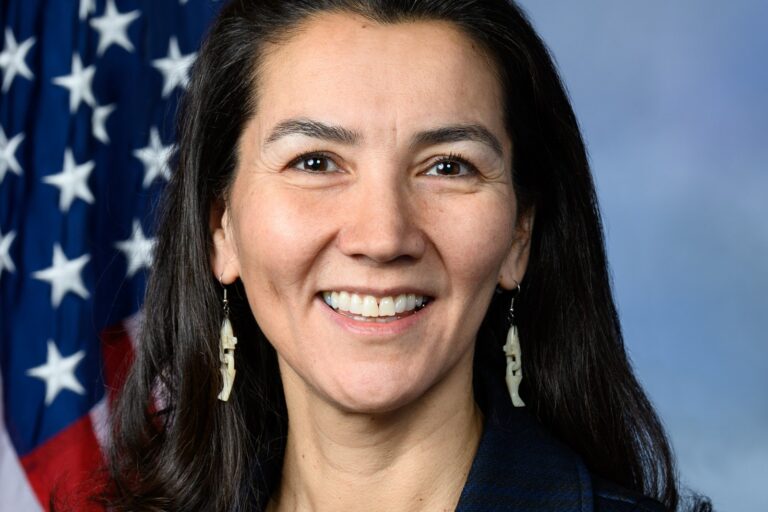
Representative Gabe Vasquez’s grandmother waited 16 years for a family visa. The New Mexico Democrat uses that delay to explain why legal immigration frustrates the very people who follow its rules.
Democrats will control both chambers of Congress for the final two years of President Donald Trump’s term. The American Immigration Lawyers Association wants the incoming majority to turn that victory into oversight and bipartisan legislation rather than another cycle of executive orders.
AILA President Jeff Joseph said the election offered a chance to “replace chaos with accountability and political posturing with practical solutions.” He called for action from day one to ensure immigration laws are administered lawfully, fairly and effectively.
Executive Director Ben Johnson rejected the proposition that enforcement must come at the expense of fairness. “We can have an orderly and secure border, meaningful enforcement, due process, legal immigration pathways that meet the needs of our economy and families, and an asylum system that is both efficient and fair,” he said.
Five priorities, three failed attempts
AILA’s framework seeks independent oversight, proportional enforcement, solutions for longtime residents, modernized legal immigration and an adequately resourced asylum system. Its immediate challenge is a legislative record littered with failure: comprehensive reform efforts died on Capitol Hill in 2006, 2007 and 2013.
Vasquez assigns blame to both parties. He said Democrats put immigration aside even when they held a Senate supermajority under President Barack Obama. His Care Worker Visa Act is a narrower proposal, opening 100,000 new visas for caregivers in childcare, elder care and disability services.
New Mexico illustrates the shortage. Vasquez said 15,000 children cannot access universal childcare because too few workers are available. His bill would permit a family to petition for a caregiver to work with them for up to three years and then obtain legal status.
The electoral pressure has moved
Immigration has also become less urgent for voters. Gallup found 28% of respondents called it the country’s most important problem in February 2024; by May 2026, the figure was 8%. The Economist/YouGov measured a fall from 14% among registered voters in October 2024 to 5% in September 2026.
That does not necessarily help Trump. His net immigration approval stood at negative 10.8% in the RealClear Polling average from September to October 2026. A Fox News poll found most Americans believed his administration had “gone too far” on enforcement, including 60% of independents.
Independents trusted Democrats over Republicans on immigration by 41% to 27% in a September 2026 Marist survey. Yet only 1% of Democrats identified immigration as their top issue in The Economist/YouGov poll.
Business wants workers and predictable costs
Restaurants employ 15.7 million people across nearly 1 million locations, making the industry the nation’s second-largest private employer. Nearly one in four restaurant workers is an immigrant.
The National Restaurant Association wants reform that protects existing employees, updates work visas and supports future hiring. It is also seeking passage of the Credit Card Competition Act and stable trade policy. Processing fees rank as the third-largest operating expense for many restaurants, behind food and labor.
Michelle Korsmo, the association’s president and chief executive, said 42% of operators were not profitable in 2025 and customer traffic had softened. She linked workforce policy, payment costs and tariffs directly to menu affordability.
Texas Senator-elect James Talarico has offered a possible route toward compromise. After defeating Attorney General Ken Paxton, he said he would work with Trump on comprehensive reform that includes border security and additional legal pathways. He credited Trump with securing the border better than the previous administration.
Trump, who endorsed Paxton, described his own conditional approach to the new Congress: “They’ll send over things that are insane, and I’ll veto them. And after a couple of months of vetoes, they’ll go out, and they’ll say, ‘How do we get this stuff done?’ And we’ll work together.”
Sources
- AILA Calls on New Congressional Majority to Seize Opportunity to Work Toward Meaningful Immigration Reform to Build American Prosperity
- Democrats are the unwitting beneficiaries of Trump’s immigration policies
- Gabe Vasquez says he would work on fixing immigration reform and Iran War costs if re-elected
- Texas Senate victor James Talarico lays out common ground with Trump, vows to 'work together'
- What the 2026 midterm results could mean for restaurants
- National Restaurant Association: New Congress Has a Clear Opportunity to Deliver for America's Restaurants – AOL
Photo: CBP Photography (Public domain)