
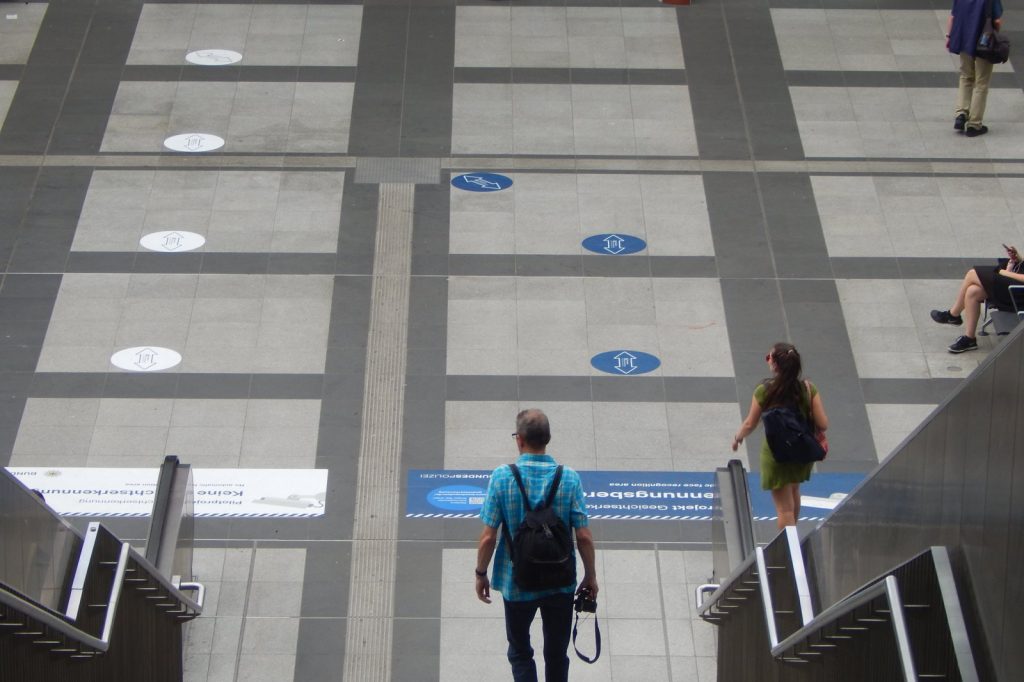
A study released by the National Institute of Standards and Technology on December 24, 2019 uncovers pervasive errors in the facial‑recognition systems that federal agencies have come to rely on for border security and criminal investigations. The analysis shows that the artificial‑intelligence algorithms currently in use frequently misidentify individuals, with error rates that vary sharply across racial and gender groups.
Disproportionate Misidentifications for Non‑White Populations
Researchers found that the technology performs far less reliably on images of people of color. In tests of two leading algorithms, the gender of black women was assigned incorrectly in roughly 35 percent of cases.
Moreover, the incidence of false‑positive matches—where a face is mistakenly linked to the wrong person—was dramatically higher for Asian and African‑American subjects. The study reports that these groups experienced up to one hundred times more false matches than white subjects, indicating a systemic bias rooted in the datasets used to train the software.
Consequences of False Positives in Law‑Enforcement Contexts
Lead investigator Patrick Grother explained that while a false negative (failure to find a match) is generally a minor inconvenience, a false positive can have severe repercussions. In a “one‑to‑many” search, an incorrect match appears on a list of potential suspects, prompting additional scrutiny. This can lead to an innocent person being placed on watchlists, subjected to interrogations, denied travel, or encountering police under suspicion of wrongdoing. The cascading effects of a single erroneous identification underscore the high stakes of deploying these systems in public‑safety operations.
Civil‑Liberties Groups Sound the Alarm
The American Civil Liberties Union, represented by Jay Stanley, warned that the technical flaws could translate into real‑world violations of constitutional rights. Stanley emphasized that a solitary false match may trigger prolonged investigations, wrongful arrests, and persistent, suspicionless surveillance—capabilities that threaten privacy on an unprecedented scale. He called for robust legal safeguards to ensure that biometric technologies do not become tools for overreach.
Calls for More Representative Training Data and Oversight
The NIST report concludes that the observed disparities stem largely from training datasets that fail to capture the full diversity of the U.S. population. To achieve equitable performance, the agency recommends that federal programs adopt more inclusive data and institute stronger oversight mechanisms.
Officials are urged to revise existing systems before expanding their deployment nationwide, lest the flaws become entrenched and erode public confidence in law‑enforcement and intelligence agencies.
Implications for Policy and Public Trust
As facial‑recognition technology continues to be integrated into security infrastructure, the findings serve as a warning that without immediate corrective action, the tools intended to protect may instead compromise civil liberties and damage institutional credibility. Transparency about how biometric data is collected, stored, and used, along with accountable governance, is presented as essential to maintaining the public’s trust.




