
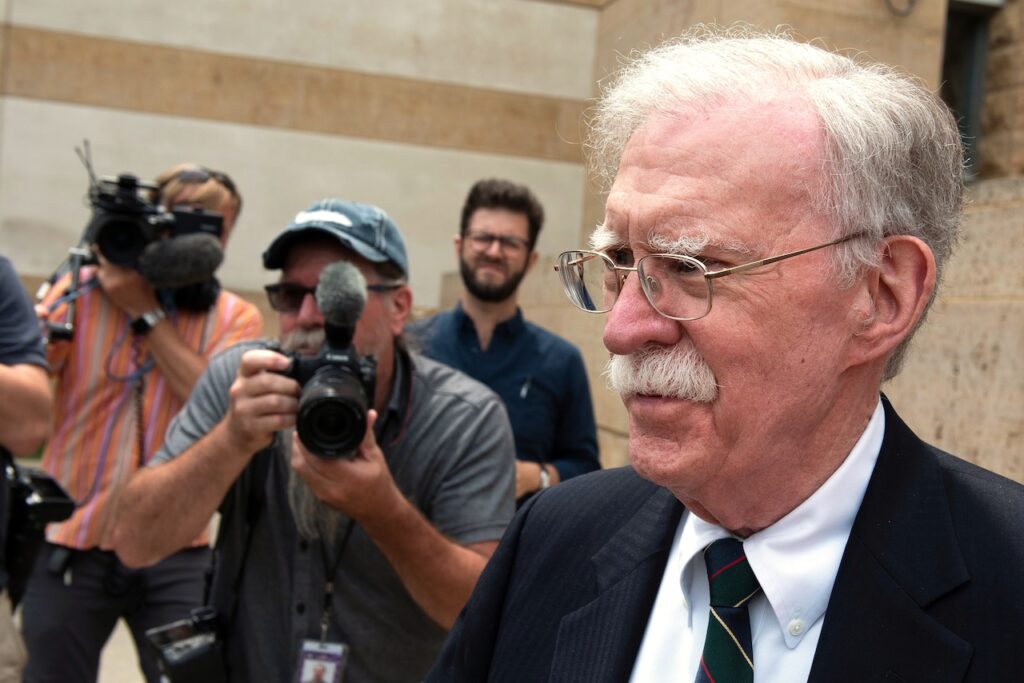
WASHINGTON, July 11 — Former National Security Advisor John R. Bolton, who served in the Trump administration from April 9, 2018, to September 10, 2019, remains a central figure in discussions about U.S. Iran policy during that period. Known as a hawk on Iran, Bolton advocated for regime change, a stance that placed him at the forefront of American strategy toward Tehran.
The New York Times recently reported that a private message from Iran was conveyed to key Trump administration officials in June 2019, following a series of tanker attacks in the Gulf. The report did not specify which advisers received the message, but Bolton and Secretary of State Mike Pompeo were the most prominent figures in U.S.-Iran policy at the time.
Pompeo served from April 26, 2018, to January 20, 2021, and outlined 12 demands for Iran on May 21, 2018. These demands included a cessation of ballistic missile development, a key point of contention between the two nations. Secretary of Defense Mark Esper, who served from July 23, 2019, to November 9, 2020, was also part of the administration’s Iran policy team.
The tanker attacks in June 2019 heightened tensions in the region, with the U.S. blaming Iran for the incidents. Iran denied involvement.
The private message from Iran, as reported by the Times, suggested a potential channel for de-escalation, though its contents and recipients remain undisclosed. Bolton’s advocacy for regime change in Iran was a defining feature of his tenure. His departure from the National Security Council in September 2019 came amid policy disagreements with President Trump, who favored a more diplomatic approach.
Pompeo, meanwhile, continued to push a hardline stance, including the 12 demands that effectively set preconditions for negotiations. The early findings of the Times report suggest that Iran may have sought to communicate directly with U.S. officials during a period of heightened military posturing. Such backchannel communications are not uncommon in crises.
Dialogue, even indirect, can sometimes reduce the risk of escalation. For now, the full details of the Iranian message remain unclear.
What is known is that Bolton and Pompeo were the key figures in shaping U.S. response to Iran’s actions in 2019. As the story develops, analysts will watch for any further disclosures about the content of the message and whether it influenced U.S. policy. The broader context of U.S.-Iran relations under the Trump administration remains a subject of study for policymakers.
The 12 demands laid out by Pompeo, including the halt to ballistic missile development, set a high bar for negotiations. Whether those demands were ever seriously considered by Tehran is a matter of debate.
Bolton’s role as a hawk on Iran is well-documented. His advocacy for regime change was not limited to rhetoric; it informed policy decisions during his tenure. The tanker attacks in June 2019 tested that policy, as the U.S. considered military responses.
The private message from Iran, as reported, may have been an attempt to avoid a broader conflict. The Times report does not provide a timeline for when the message was received or how the administration responded. What is clear is that Bolton and Pompeo were the primary recipients, given their roles.
Esper, as Defense Secretary, would have been involved in any military considerations. As we look ahead, the question remains whether the Iranian message was a genuine attempt at diplomacy or a tactical maneuver.
The early findings suggest it was the former, but caution is warranted. For now, the story serves as a reminder of the delicate balance between hawkishness and diplomacy in U.S. foreign policy. Bolton’s tenure, though brief, left a lasting imprint on Iran policy.
Channels of communication, even when private, can offer a path away from conflict. In the coming months, further details may emerge about the message and its impact.
Until then, the focus remains on the key players: Bolton, Pompeo, and Esper. Their actions in 2019 continue to shape the narrative of U.S.-Iran relations. The broader lesson, perhaps, is that even in times of high tension, dialogue can find a way.




