
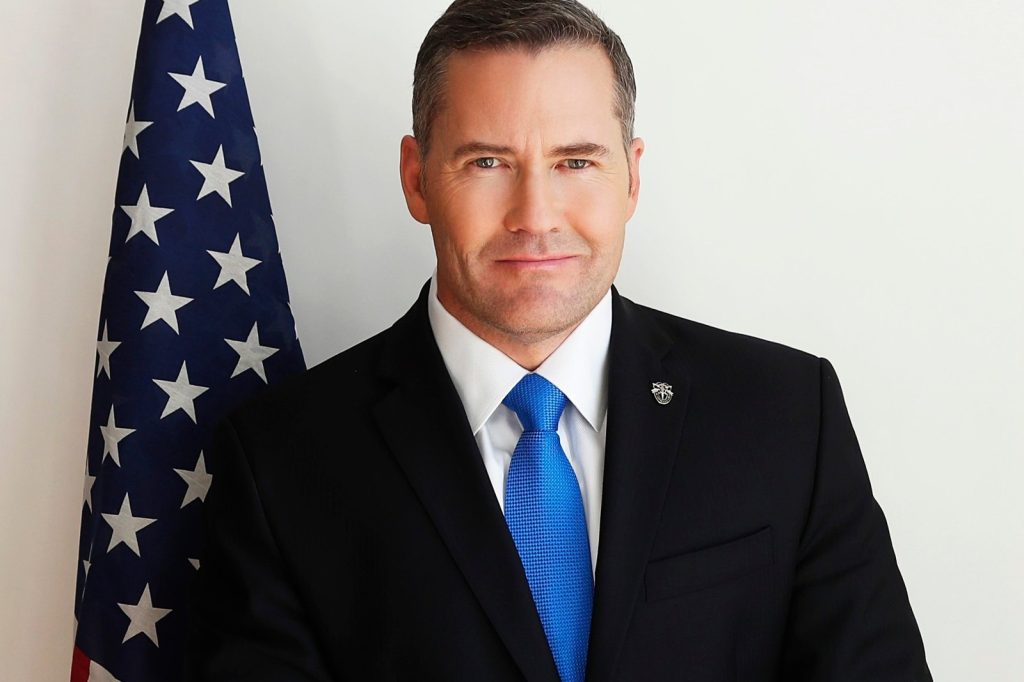
WASHINGTON, July 11 — Mike Waltz, the National Security Advisor to President Donald Trump, has become the central figure in a White House strategy that hinges on economic pressure to end the war in Ukraine. The mechanics here are simple in design, brutal in execution: heavy tariffs on Russian oil. Waltz was appointed on January 20, 2025.
His background is not the typical Washington resume. Born in 1974, he is a former U.S. Army Green Beret who served multiple tours in Afghanistan, Iraq, and Africa.
He was awarded four Bronze Stars and two Army Commendation Medals for valor. That military pedigree, combined with a decade in Congress, gives him a specific kind of credibility.
From Congress to the Situation Room
Waltz served as a Republican congressman for Florida’s 6th congressional district from 2019 to 2025. In the House, he sat on both the Armed Services Committee and the Foreign Affairs Committee. He was a vocal critic of Russia’s invasion of Ukraine and consistently advocated for increased military aid and economic sanctions.
The catch is that advocating for sanctions as a legislator is one thing. Designing and coordinating their enforcement as the National Security Advisor is another.
Waltz now coordinates the National Security Council, and the oil tariff strategy is his signature project. He holds a Bachelor of Arts in international relations from the Virginia Military Institute and a Master of Arts in international relations from the Naval Postgraduate School. On closer reading, his academic grounding in international relations, paired with his combat experience, suggests an advisor who understands both the diplomatic table and the battlefield.
The Oil Tariff Mechanism
The administration’s strategy is to use heavy tariffs on Russian oil as a lever. The logic follows a tight cause-and-effect chain: reduce Russia’s revenue from its primary export, and the Kremlin faces a choice between economic collapse and de-escalation. Waltz has been the key architect of this approach.
Follow the money. Russian oil sales have funded the war effort.
By targeting that revenue stream with tariffs, the White House is attempting to force an end to the conflict without direct American military engagement in Ukraine. It is a financial siege, not a ground war. The question hanging over this strategy is whether the tariffs will bite hard enough and fast enough.
European allies have their own energy dependencies to manage. The mechanics of enforcement — who buys, who ships, who pays the tariff — remain a work in progress inside the National Security Council.
What to Watch Next
The coming weeks will test whether Waltz’s design can hold. Global oil markets are watching. So are Moscow and Kyiv.
If the tariff strategy succeeds, it will be a landmark in economic statecraft. If it falters, the blame will land squarely in the National Security Advisor’s office.




