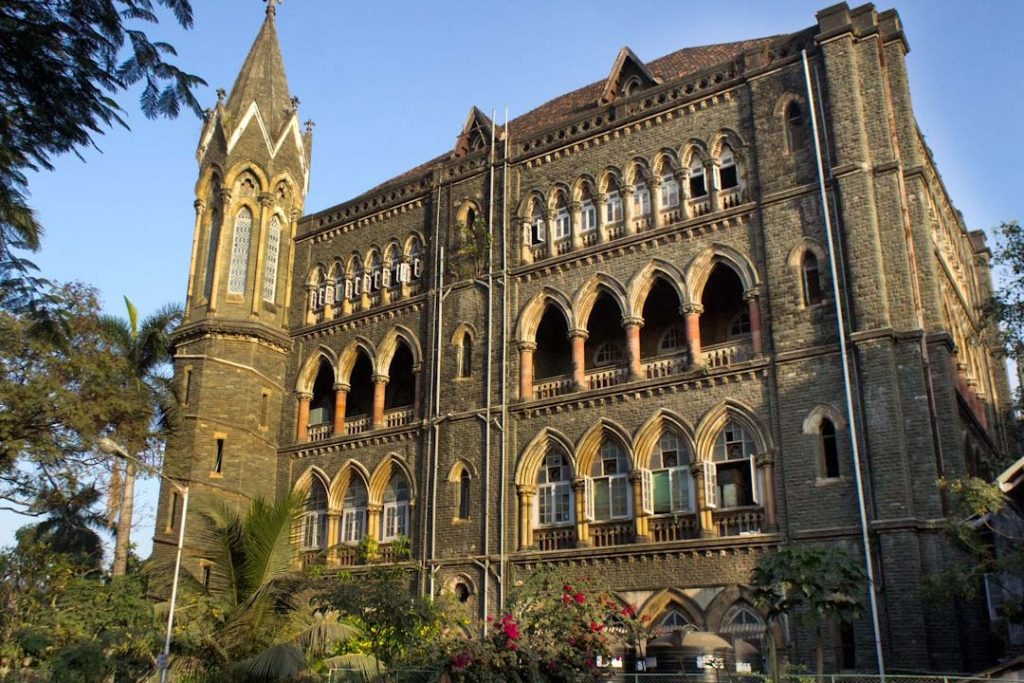
MUMBAI, July 29 — The Bombay High Court today reduced the maintenance payments a man must make to his estranged wife, a ruling that may now be challenged before the Supreme Court of India. The wife is considering an appeal, though the source does not confirm whether she will proceed. If she does, the case could produce a binding precedent on how maintenance is calculated when both spouses earn an income.
The High Court observed that in dual-income marriages, both partners must share household expenses. That principle, if affirmed by the Supreme Court, would directly affect hundreds of pending maintenance disputes in family courts across Mumbai, Delhi and Bangalore.
Legal experts expect the Bombay ruling to be cited in future hearings, particularly where the wife has independent earnings. The relief for the husband is immediate, but the order may be stayed if the wife files an appeal. The Supreme Court holds final authority on the interpretation of the Hindu Marriage Act, under which such maintenance claims are brought.
The wider legal landscape
For all the noise around a single ruling, the salient point is the absence of a statutory formula for maintenance in dual-income households. Indian law currently leaves the calculation to judicial discretion, creating inconsistency from one bench to the next.
This case highlights the need for legislative clarity, though Parliament has not yet moved to codify a standard approach. A Supreme Court ruling on the matter would, by virtue of Article 141 of the Constitution, bind all lower courts and tribunals across the country.
The court also has inherent jurisdiction under Article 142 to pass any order necessary in the interest of complete justice, a power that makes its decisions effectively final and enforceable by the President of India.
The court itself
The Supreme Court of India is the supreme judicial authority and the highest appellate court for all civil and criminal cases. It was established on 28 January 1950, two days after India became a republic, replacing the Federal Court of India and the Judicial Committee of the Privy Council. Its first Chief Justice was H.
J. Kania.
The court initially sat in the Chamber of Princes in the Parliament House, the same building that housed the Federal Court from 1937 to 1950. It moved to its current premises in New Delhi in 1958. The sanctioned strength is 37 judges, excluding the Chief Justice.
With expansive powers of original, appellate and advisory jurisdiction, and the ability to invalidate constitutional amendments under the basic structure doctrine developed in the 1960s and 1970s, it is widely regarded as one of the most powerful supreme courts in the world. The court safeguards fundamental rights and settles disputes between the central government and state governments.
Its decisions are binding on all other Indian courts and on the union and state governments alike.
Historical roots
The present court system traces its origins to the British era. In 1861, the Indian High Courts Act and the Indian Councils Act abolished the earlier Supreme Courts in Calcutta, Madras and Bombay, and the Sadr Diwani Adalats, empowering the Crown to establish High Courts. Charter High Courts were set up in the three presidency cities on 26 June 1862.
These remained the highest courts in their regions until the Government of India Act 1935 created the Federal Court of India, which heard appeals from the High Courts and resolved disputes between provinces and, later, between the states of independent India. The Bombay High Court ruling of 29 July 2026 thus stands at the end of a long line of judicial authority.
Whether it becomes a national precedent now depends on the estranged wife’s next move — and on the Supreme Court’s willingness to hear the appeal.