
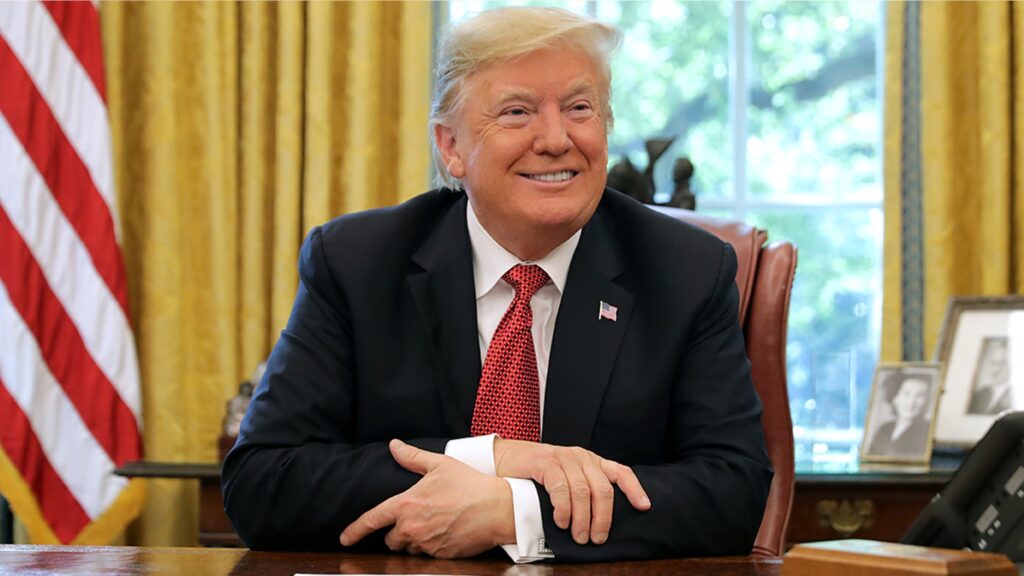
WASHINGTON, July 16 — A familiar legal and political clash is unfolding at the Federal Communications Commission today, triggered by a programming decision that has thrust the agency into the center of a national debate. Several broadcast networks declined to carry a primetime address by President Trump on their main channels, prompting a chorus of supporters to demand that the FCC suspend or revoke the broadcast licenses of ABC, CBS, and NBC.
The argument advanced by these proponents rests on a foundational principle of American broadcast regulation: broadcasters use public airwaves, and their licenses are conditioned on serving “the public interest, convenience, and necessity.” Declining a presidential national address, they contend, constitutes a betrayal of that duty. That public-interest standard is real and remains the bedrock of broadcast regulation in the United States.
However, the legal reality on the ground is that pulling a license over a coverage decision is not a viable course of action. The FCC does not license national networks. There is no single ABC, CBS, or NBC license to revoke.
The agency licenses individual local broadcast stations — the affiliates in each city, along with a handful of network-owned stations. This distinction is critical to understanding the limits of the agency’s power in this dispute.
The Legal Framework Governing Broadcast Content
The FCC is an independent agency of the United States federal government, established pursuant to the Communications Act of 1934 to replace the radio regulation functions of the previous Federal Radio Commission. The agency took over wire communication regulation from the Interstate Commerce Commission and now regulates communications by radio, television, wire, internet, Wi-Fi, satellite, and cable across the United States.
Its mandated jurisdiction covers the 50 states, the District of Columbia, and the territories of the United States. The FCC is directed by five commissioners appointed by the president and confirmed by the Senate for five-year terms, with no more than three commissioners allowed to be members of the same political party. The president designates one commissioner to serve as chairman. Section 326 of the Communications Act, codified at 47 U.S.C. 326, bars the FCC from censoring broadcast content or dictating programming.
The First Amendment to the U.S. Constitution prohibits punishing a broadcaster for its editorial choices. There is no must-carry-the-president rule in federal law.
Broadcasters of both political parties have declined to air presidential addresses before, establishing a precedent that the current dispute follows. First Amendment scholars have characterized even FCC-chair threats to pull licenses over coverage decisions as legally empty. The narrow exceptions to this framework do not cover a decision to skip a speech.
The FCC can act in cases of knowingly broadcasting false information that causes substantial, foreseeable public harm, or documented intentional news distortion. Declining to air a primetime address falls into neither category.
The agency’s mandate, as specified in the Communications Act of 1934 and amended by the Telecommunications Act of 1996, is “to make available so far as possible, to all the people of the United States, without discrimination on the basis of race, color, religion, national origin, or sex, rapid, efficient, nationwide, and world-wide wire and radio communication services with adequate facilities at reasonable charges.” The Act further provides that the FCC was created “for the purpose of the national defense” and “for the purpose of promoting safety of life and property through the use of wire and radio communications.”
What the Law Allows and the Path Forward
By nightfall, the accurate bottom line is clear: the carriage decisions are a legitimate subject of criticism, but the government cannot lawfully strip licenses over them. The public-interest standard is real, but it does not give the FCC a veto over programming choices. The agency’s role is to ensure that broadcasters serve their communities, not to dictate what those communities see.
The FCC maintains jurisdiction over the areas of broadband access, fair competition, radio frequency use, media responsibility, public safety, and homeland security, but these responsibilities do not extend to reviewing or approving individual programming decisions. The question now is whether the political pressure will translate into any formal action.
The FCC has not announced any proceeding. The networks have not changed their programming. The law, as it stands, offers no path to revocation over this dispute.
The FCC is funded entirely by regulatory fees, with an estimated fiscal-2022 budget of $388 million, and employed 1,433 federal personnel as of 2022. What remains is a debate about public interest — one that the First Amendment, and the Communications Act, have already settled.
The agency’s commissioners, who may serve beyond their official term expiration until the appointment of replacements but not beyond the end of the next session of Congress, face no immediate legal mechanism to act on the demands being made today.
Sources
{“@context”: “https://schema.org”, “@type”: “NewsArticle”, “headline”: “FCC pressed to revoke network licenses over Trump speech snub”, “description”: “WASHINGTON, July 16 — A familiar legal and political clash is unfolding at the Federal Communications Commission today, triggered by a programming decision that has…”, “datePublished”: “2026-07-16T09:30:00+00:00”, “author”: {“@type”: “Person”, “name”: “Maria Romano”}, “publisher”: {“@type”: “Organization”, “name”: “InfoPulse Today”, “url”: “https://newsfeed.2bme.xyz/”}, “citation”: [{“@type”: “CreativeWork”, “url”: “https://en.wikipedia.org/wiki/Federal_Communications_Commission”}, {“@type”: “CreativeWork”, “url”: “https://www.brookings.edu/articles/donald-trump-has-threatened-to-shut-down-broadcasters-but-can-he/”}]}




