
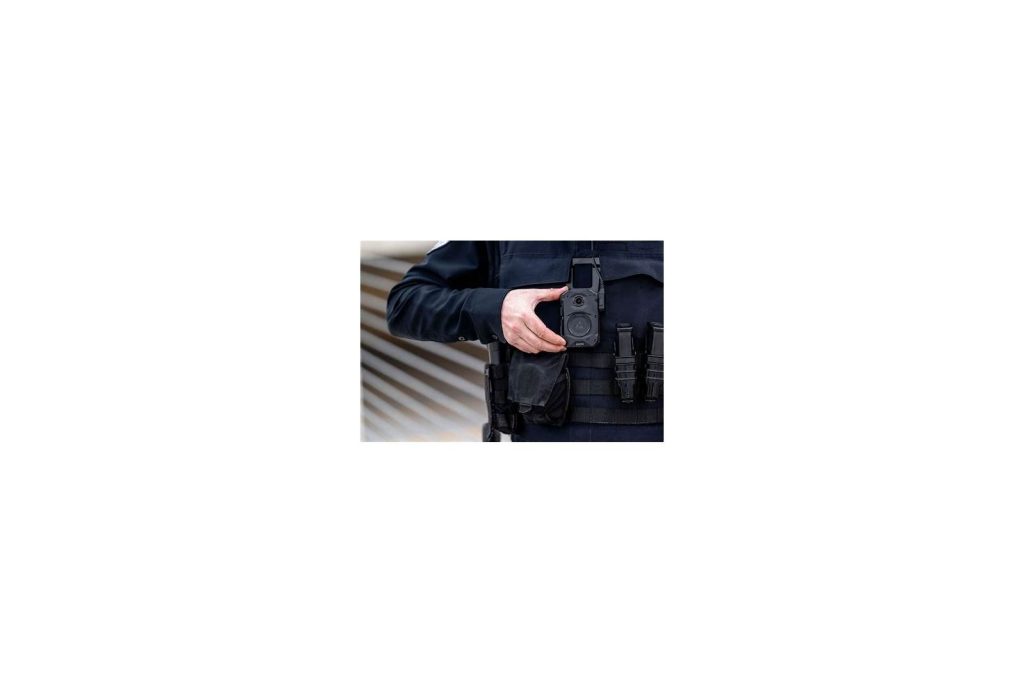
LONDON, July 16 — The Fourth Amendment to the United States Constitution is about to face its most granular test yet: the wearable camera. As police forces, private security firms and even some employers deploy body-worn recording devices at scale, the old legal architecture of “unreasonable searches and seizures” is being asked to cover something the Framers never imagined — a continuous, mobile surveillance feed that follows a person through their day. Under the hood, the technical reality is straightforward.
A modern body camera can capture audio, video and, on some models, biometric data. The legal question is whether that capture, in any given moment, constitutes a “search” under the Fourth Amendment.
For decades after ratification, the courts held that the amendment only blocked physical intrusions — a constable crossing the threshold, a hand rummaging through a coat pocket. That changed in 1967, with Katz v. United States, when the Supreme Court ruled that the Fourth Amendment protects people, not places.
The test became whether a person has a “reasonable expectation of privacy” in the situation. That is the detail that matters now.
A wearable camera recording a conversation on a public street is almost certainly not a search. The same camera, pointed through a bedroom window or left running in a locker room, almost certainly is. Between those poles lies a vast grey zone of semi-public spaces — office corridors, shared vehicles, front gardens — where the courts will have to decide, case by case, whether the device intrudes on a reasonable expectation of privacy.
A warrant is the default requirement for most searches and seizures under the Fourth Amendment. The Supreme Court has, as ever, carved out exceptions: consent searches, motor vehicle searches, evidence in plain view, exigent circumstances, and border searches, among others. For wearable cameras, the “plain view” doctrine is particularly tricky.
If an officer wearing a body camera walks into a home with consent and the camera records contraband on a coffee table, is that a lawful seizure? The answer may depend on whether the camera is doing something the officer’s eyes could not — zooming, recording for later review, or capturing a room the officer did not consciously inspect.
The exclusionary rule, established in Weeks v. United States in 1914, enforces the Fourth Amendment by rendering evidence obtained from a violation inadmissible at criminal trials. That rule is the practical brake on warrantless surveillance.
If a prosecutor cannot use the footage, the camera’s evidentiary value collapses. But the rule only applies if a court first finds that a search occurred and that it was unreasonable.
That finding, in the wearable-camera context, is far from automatic. Courts will need to decide whether the mere act of recording in a given location is a “search” under Katz. If it is, they must then determine whether an exception applies — for example, whether the wearer had consent from all parties, or whether exigent circumstances justified recording without a warrant.
The answers will shape everything from police body-camera policies to the use of wearable devices by private security firms on their own property. None of this is hypothetical. As the technology becomes cheaper and more pervasive, the volume of recorded data will grow exponentially.
The Fourth Amendment’s text — requiring warrants “particularly describing the place to be searched, and the persons or things to be seized” — was written for a world of fixed locations and discrete objects. A wearable camera that records everything its wearer sees and hears, for hours at a time, does not fit that model easily.
What to watch next: the circuit courts. Several cases involving body-camera footage are working their way through the federal system, and the Supreme Court will eventually have to clarify how Katz applies to a device that never blinks. Until then, the technical reality runs ahead of the legal one — as ever in the technology beat.
Sources
{“@context”: “https://schema.org”, “@type”: “NewsArticle”, “headline”: “Katz v. US Sets Privacy Standard for Wearable Camera Surveillance”, “description”: “LONDON, July 16 — The Fourth Amendment to the United States Constitution is about to face its most granular test yet: the wearable camera. As…”, “datePublished”: “2026-07-16T09:30:00+00:00”, “author”: {“@type”: “Person”, “name”: “Sebastian Smith”}, “publisher”: {“@type”: “Organization”, “name”: “InfoPulse Today”, “url”: “https://newsfeed.infopulsetoday.com/”}, “citation”: [{“@type”: “CreativeWork”, “url”: “https://en.wikipedia.org/wiki/Fourth_Amendment_to_the_United_States_Constitution”}]}




