
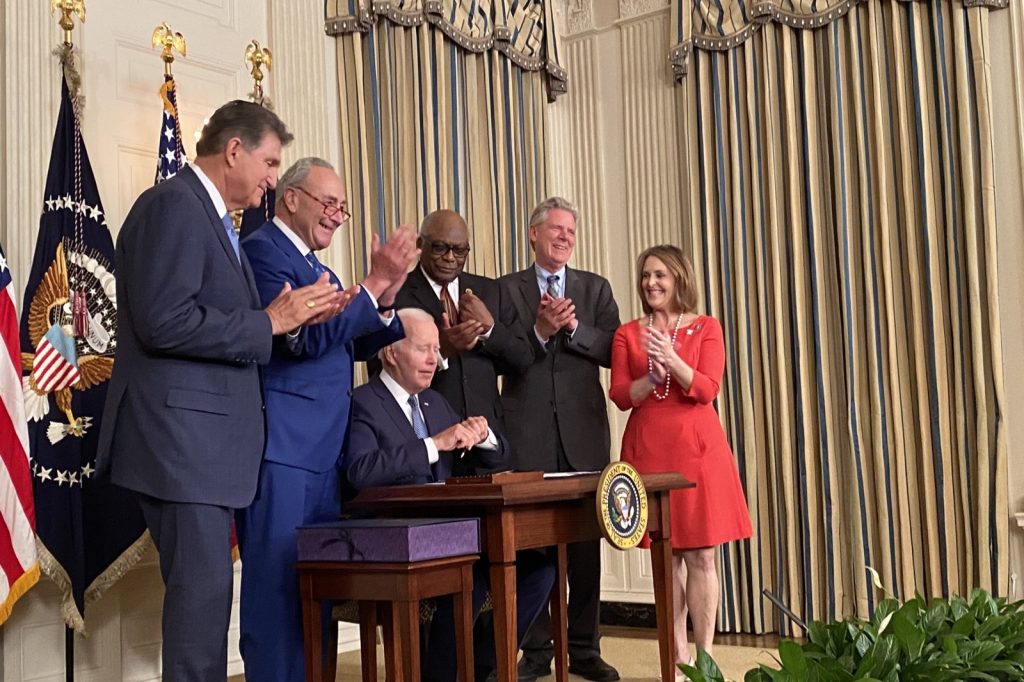
Two years ago, Joe Biden signed the Inflation Reduction Act into law. Now, with a formal reelection bid launched, he is betting voters will remember. The announcement, made April 25, 2023, was procedural in form but blunt in its political calculation: the 46th president is running on what he has already done, and what he says he will protect.
Kamala Harris stays on the ticket. No surprises there.
The real news is in the message. Biden’s campaign is built on a set of legislative victories — the Infrastructure Investment and Jobs Act, the Chips and Science Act, the Inflation Reduction Act. Each one passed a divided Congress.
Each one delivers federal money to roads, bridges, semiconductor manufacturing, and climate programs. The campaign will argue those are tangible results, not promises.
But the president is also running on a defense. Protecting American democracy is the stated central focus. That phrase, vague in some contexts, carries specific weight here.
It references the January 6 attack, ongoing efforts to restrict voting access in several states, and a political opponent who has questioned election integrity. Biden is framing the 2024 election as a choice between democratic stability and something else. Abortion rights are a second pillar.
Since the Supreme Court overturned Roe v. Wade, Biden has pushed to restore the federal right to abortion.
That decision, handed down in 2022, reshaped the political landscape. Democrats believe it mobilized voters in the midterms. They expect it to do the same in a presidential year.
The campaign will tie the issue directly to the president’s opponent, whoever that ends up being. Border security and law enforcement get a more complicated treatment.
Biden has proposed increasing funding for border patrol and security. He has also proposed increasing funding for law enforcement generally, while coupling that with police reform. It is a balancing act.
The president is trying to satisfy voters who want order and voters who want accountability. Whether that balance holds through a campaign is an open question. LGBT rights are part of the platform too.
Biden has pledged to support, protect, and expand them. The promise aligns with his record in office, which includes signing the Respect for Marriage Act into law.
For a Democratic base that views these issues as non-negotiable, the pledge is expected, but it still matters. The timing of the announcement — April 25, 2023 — is early by historical standards but not unprecedented. Incumbents often declare early to lock in fundraising and organizational structure.
Biden’s team is already running. The Democratic National Committee is coordinating.
State parties are preparing. What remains uncertain is the opposition. No Republican nominee has been chosen.
The primary season will produce one, and that person will shape the contours of the general election. Biden’s team is preparing for a race that could center on age, economic performance, and cultural conflict. They are also preparing for a race that could be decided by narrow margins in a handful of states.
The campaign’s message is clear: Biden has delivered. Now he wants a second term to protect what was built.
Whether that argument wins depends on whether voters see the same reality the campaign does.
{“@context”: “https://schema.org”, “@type”: “NewsArticle”, “headline”: “Biden Campaign Centers Reelection Bid on Inflation Reduction Act Legacy”, “description”: “Two years ago, Joe Biden signed the Inflation Reduction Act into law. Now, with a formal reelection bid launched, he is betting voters will remember. The announ”, “datePublished”: “2023-04-26T15:00:00+00:00”, “author”: {“@type”: “Person”, “name”: “InfoPulse Today”}, “publisher”: {“@type”: “Organization”, “name”: “InfoPulse Today”}}




