
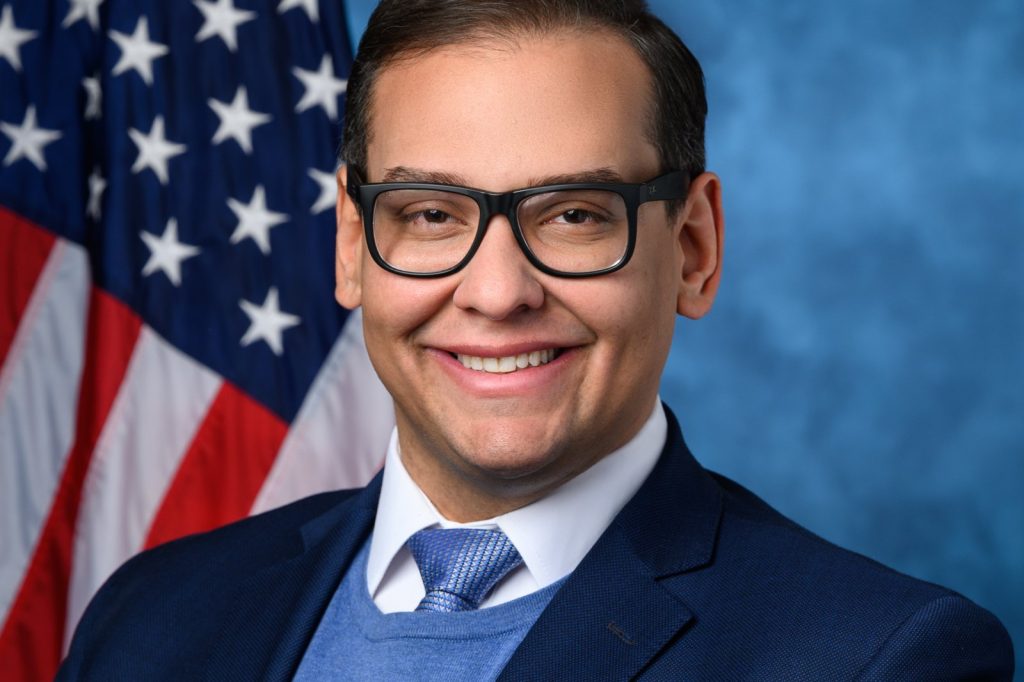
An Ongoing Saga: George Santos’s Office Amidst Ethics Probe and Pending Federal Indictment
In an unprecedented turn of events, George Santos, the representative for New York’s 3rd congressional district, finds himself at the center of a complex web of investigations and allegations. Despite the looming House Ethics Committee probe and a pending federal indictment, Santos continues to hold his office.
Santos was sworn into office in January 2023, following two consecutive election attempts. His first bid, in 2020, saw him lose to Democrat Tom Suozzi. However, a shift in political landscape in 2022 saw Suozzi step down, paving the way for Santos to clinch the seat from Democrat Robert Zimmerman.
Santos made history as the first openly LGBTQ Republican to be elected to Congress as a freshman. However, this milestone has been overshadowed by the subsequent revelations.
Within weeks of the election, inconsistencies began to surface in Santos’s biography. Media outlets uncovered large portions of it to be fabricated. Santos admitted to falsifying his educational background and employment history. His financial disclosures, concerning business activities, income, and personal wealth, were inconsistent.
He failed to disclose his criminal history and ongoing lawsuits against him. Despite these revelations, Santos has not been removed from office.
The Constitution grants Congress the power to expel a member, but this requires a two-thirds vote. The House Ethics Committee can recommend punishment, but its investigations take time. A federal indictment can lead to a trial, but this too takes time.
In the interim, the member retains the office, the staff, the vote, the salary. Calls for Santos’s resignation have echoed from both political parties, with growing intensity.
Yet, these calls have thus far gone unheeded. This is not a novel predicament. The mechanisms of congressional accountability were designed for an era where news cycles spanned days and scandals unfolded over weeks.
They were not engineered for a world where a candidate’s entire resume can be scrutinized publicly before a single vote is cast. The chasm between public knowledge and the system’s ability to respond swiftly has never been more pronounced.
The forces that propelled Santos into office warrant examination. He campaigned in a district previously held by a Democrat. He ran as a Republican during a midterm election that favored his party.
He challenged a Democrat who was not an incumbent. These structural advantages played a significant role.
The fabrications emerged post-election, after the votes had been counted. This sequence is disquieting for both parties. For Democrats, it raises questions about why the district’s voters failed to discern the lies before Election Day.
For Republicans, it raises questions about what the party knew and when, and whether the desire to win a seat outweighed the due diligence that should have uncovered the discrepancies. The future remains uncertain.
The House Ethics Committee’s investigation may yield a report compelling a vote on expulsion. The federal indictment could result in a conviction, leading to automatic removal. Alternatively, Santos could choose to resign, as many have urged him to do. However, none of these outcomes are guaranteed, and none will occur expeditiously.
For now, the story of George Santos is a narrative about the disparity between what is known and what is acted upon. This disparity is the real scandal.
Related Stories
- House Ethics Probes Santos Over Fabricated Bio




