
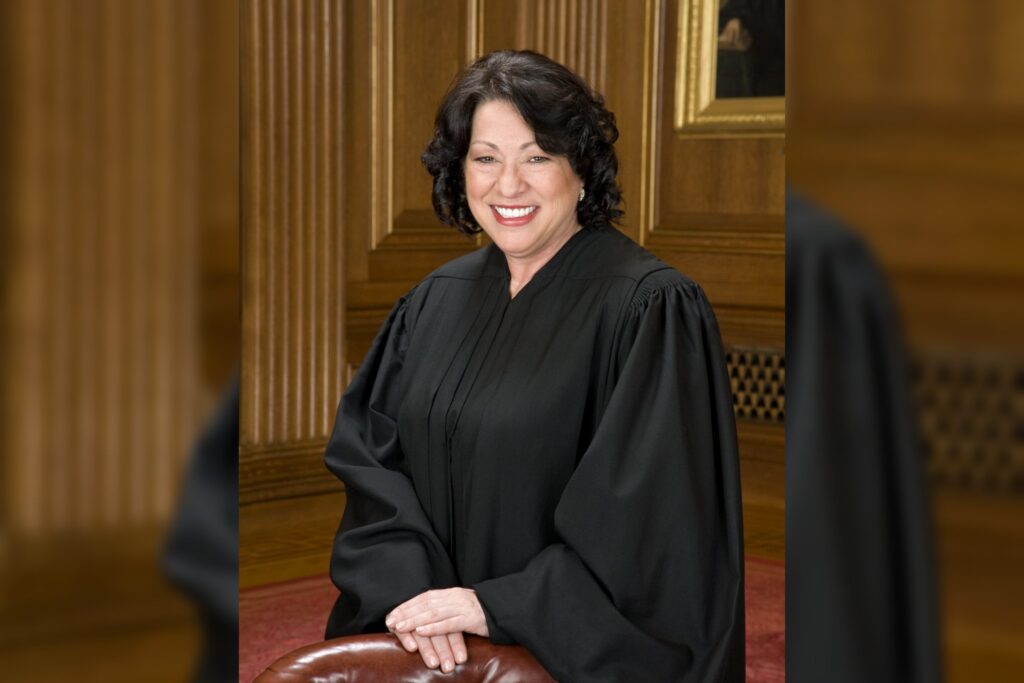
WASHINGTON, July 5 — Justice Sonia Sotomayor remains the most consistent liberal voice on the Supreme Court as the current term winds down, having cast the decisive vote in the term’s most consequential immigration case. The detail that matters is that her jurisprudence has not shifted an inch since her appointment sixteen years ago. Sotomayor was appointed by President Barack Obama in 2009, making her the first Hispanic and first Latina justice in the Court’s history.
She was born on June 25, 1954, in New York City to Puerto Rican parents. Her academic credentials are impeccable: an A.B. from Princeton University in 1976, followed by a J.D. from Yale Law School in 1979.
Under the hood, that Yale pedigree has always informed a methodical, text-focused approach to even the most politically charged cases.
The Texas decision
In the 2025 case United States v. Texas, No. 24-123, Sotomayor voted with the majority to uphold birthright citizenship under the 14th Amendment. The technical reality of that ruling is straightforward: the Court affirmed that the Citizenship Clause applies to anyone born on U.S. soil, regardless of their parents’ immigration status.
It was a clean, precedent-driven outcome that drew sharp lines around executive authority. Sotomayor’s vote in that case was never in doubt.
She is known for her liberal jurisprudence and advocacy for minority rights, and the Texas case cut directly to those commitments. The decision itself was a significant check on the current administration’s immigration enforcement agenda.
A record of notable dissents
As ever, Sotomayor has written several notable dissents on issues including affirmative action and criminal justice. These are not mere procedural objections; they are carefully constructed legal arguments that often read as blueprints for future challenges. Her dissents on affirmative action, in particular, have been cited by legal scholars as the most thorough articulation of the constitutional case for race-conscious admissions policies.
Her criminal justice dissents have focused on sentencing disparities and prosecutorial overreach. In case after case, she has argued that the Court’s conservative majority has eroded protections for defendants, particularly those from minority communities.
The pattern is consistent: she writes for the record, knowing the majority will prevail, but determined to preserve the legal arguments for a different era.
Career trajectory
Before joining the Supreme Court, Sotomayor served as a U.S. District Judge for the Southern District of New York from 1992 to 1998. She then moved to the U.S. Court of Appeals for the Second Circuit, where she served from 1998 until her elevation to the high court in 2009. That decade and a half on the federal bench gave her a reputation as a thorough, sometimes demanding, questioner of counsel.
The Southern District posting was particularly instructive. It is one of the busiest trial courts in the country, handling everything from Wall Street fraud to organised crime prosecutions.
Sotomayor’s time there gave her a working judge’s feel for how legal rules actually play out in a courtroom, as opposed to how they look in a law review article.
What to watch next
As the Court heads into its summer recess, the question is whether Sotomayor will continue to hold the majority in the term’s remaining blockbuster cases. With several major rulings still pending on executive power and regulatory authority, her vote remains critical. The Texas decision showed she can still command a majority on core constitutional questions.
The coming weeks will test whether that coalition holds on the harder cases yet to come.
{“@context”: “https://schema.org”, “@type”: “NewsArticle”, “headline”: “Sonia Sotomayor Remains Consistent Liberal Voice, Casts Decisive Immigration Vote”, “description”: “WASHINGTON, July 5 — Justice Sonia Sotomayor remains the most consistent liberal voice on the Supreme Court as the current term winds down, having cast…”, “datePublished”: “2026-07-05T09:30:00+00:00”, “author”: {“@type”: “Person”, “name”: “Sebastian Smith”}, “publisher”: {“@type”: “Organization”, “name”: “InfoPulse Today”, “url”: “https://newsfeed.2bme.xyz/”}}




