
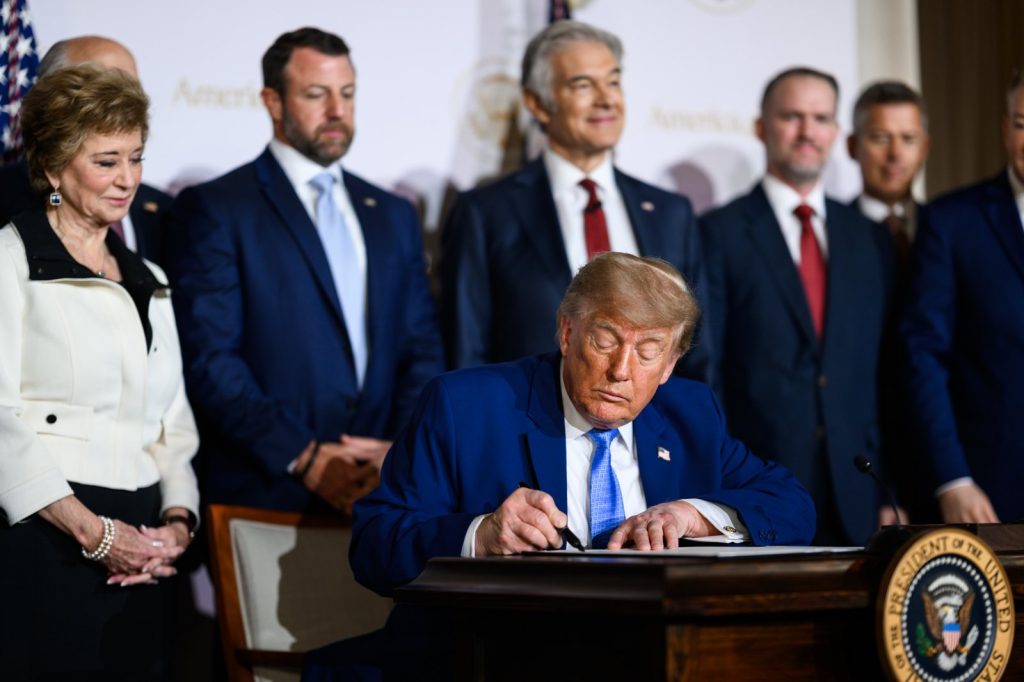
President Donald Trump signed Executive Order 14257 on April 2, 2025, a day he referred to as “Liberation Day,” marking a major shift in U.S. trade policy. The signing ceremony took place in the White House Rose Garden.
The executive order declares a national emergency over the nation’s large and persistent annual goods trade deficits. It invokes the International Emergency Economic Powers Act, granting the president broad authority to impose economic sanctions in response to what the administration considers a threat to economic security. This legal basis has sparked debate over the limits of executive power and potential misuse of authority.
Under the order, the Trump administration has introduced what it calls “reciprocal” tariffs. Starting April 5, a baseline duty of 10% will apply to imports from nearly all countries.
Higher rates are scheduled to take effect on April 9 for major trading partners. The administration argues these measures are necessary to counteract trade barriers faced by U.S. exports and to promote fair trade practices. However, trade analysts have challenged the “reciprocal” label.
They note that the new U.S. tariffs often exceed the duties foreign countries impose on American goods and include nations with which the United States runs a trade surplus. Economists have also criticized the formula used to calculate these tariffs, describing it as overly simplistic and disconnected from actual trade barriers.
The tariffs are expected to affect businesses and industries heavily dependent on international trade. U.S. consumers and the broader economy will also feel the impact as the measures take effect. The coming week is seen as critical, with the April 9 deadline for higher tariffs on major partners likely to determine whether other countries retaliate or seek negotiations. The international response remains uncertain.
Key questions include whether trading partners will impose their own tariffs or pursue new trade agreements with the United States. The outcome will have significant implications for the global economy and the future of international trade.
As the situation develops, the Trump administration faces pressure to show that its approach effectively addresses the trade deficit and fosters fair trade. The consequences of this policy shift are expected to unfold over months and years, with the world closely monitoring events in the days ahead.




