
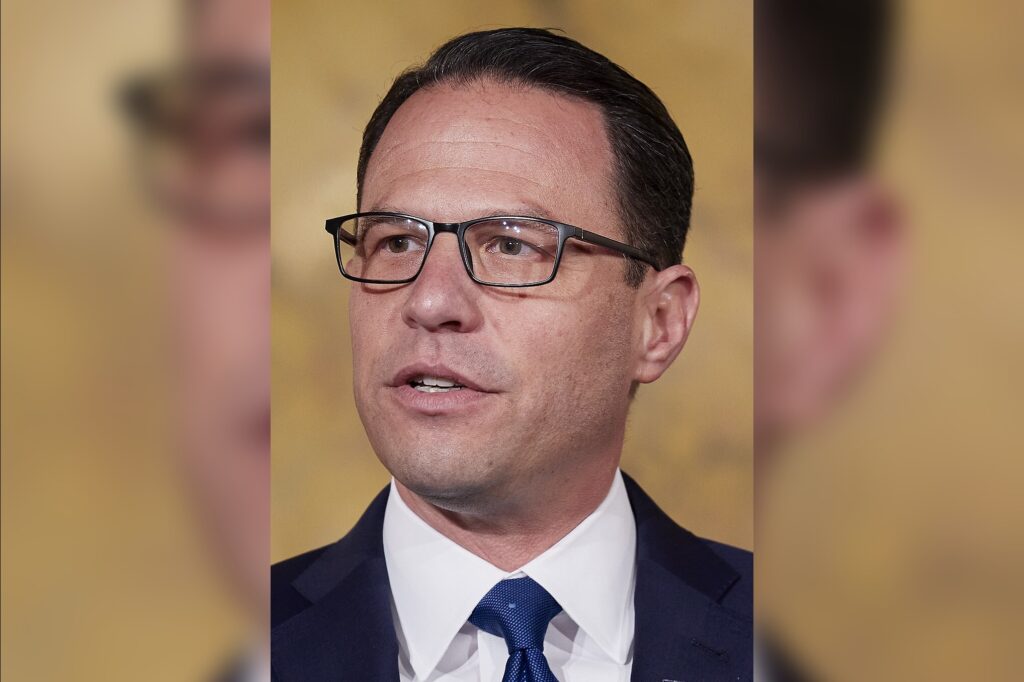
Jonathan Turley’s analysis drops into a real argument among Democrats — one that is not abstract. The people most affected by Josh Shapiro’s failed vice-presidential bid are not inside the Beltway. They are the voters in Pennsylvania who cast ballots for a man they believed was a different kind of Democrat.
Shapiro won the governorship in 2022 by running as a prosecutor, a pragmatist, a guy who talked about fixing roads and bridges. He did not run on Medicare for All.
He did not run on the Green New Deal. He won a purple state, the kind of state Democrats have to hold to win the White House. The people who voted for him — moderates, independents, even some Republicans — saw him as proof that the party could still produce candidates who did not scare the suburbs.
Then Kamala Harris needed a running mate. Shapiro’s name was everywhere.
He was the moderate from a swing state. The obvious choice. But the progressive wing of the party had other ideas.
They wanted ideological purity. They wanted a candidate who would embrace the full left-wing agenda. Shapiro, with his record as attorney general and his centrist branding, was not that candidate.
Turley’s argument is blunt: Shapiro caved to the loons. He tried to appease the activists.
He ended up pleasing no one. The result is that he lost his chance at the national ticket. The people who lose with him are the Pennsylvania voters who bet on a moderate.
They are the Democrats in the industrial Midwest who thought the party had learned its lesson about nominating candidates who cannot win the middle. There is a structural problem here that goes beyond one man’s career.
Young Americans, as the source material notes in a separate context, are falling in love with socialism. That shift in the Democratic base creates a brutal math problem. The activist class demands candidates who embrace left-wing policies.
The general election requires candidates who can win Pennsylvania, Michigan, Wisconsin. Those two things are increasingly incompatible. Shapiro entered the national conversation at exactly the wrong moment.
The party’s internal factions were sharpening their knives. The progressives were organized.
They had demands. Shapiro, who campaigned on competence, was never going to satisfy them. So he tried to bend.
He tried to show he could be flexible. Turley says that was the mistake.
He lost his brand without winning the activists. The people affected by this are not just political insiders. They are the voters in Pittsburgh and Philadelphia and Erie who thought they had found a Democrat who could talk about crime without apologizing, who could talk about the economy without promising revolution.
They are the union members who backed him. They are the suburban women who crossed over. They are the people who believed that a moderate could still win.
Now those voters are left with a question. If Shapiro could not survive the vice-presidential vetting, what does that mean for the next moderate?
What does it mean for the party’s ability to hold the center? Turley’s answer is not comforting. The party’s activist base demands ideological purity.
Candidates who cannot deliver it get discarded. The people who voted for them get discarded too.
The numbers do not lie. The coalition that elected Shapiro in Pennsylvania is not the same coalition that dominates the Democratic primary process. That is the real story.
Shapiro could have been the adult in the room. He could have run as the governor who delivered results in a purple state. Instead, he tried to appease the activists.
He lost the vice-presidency. The voters who trusted him lost something too.




