
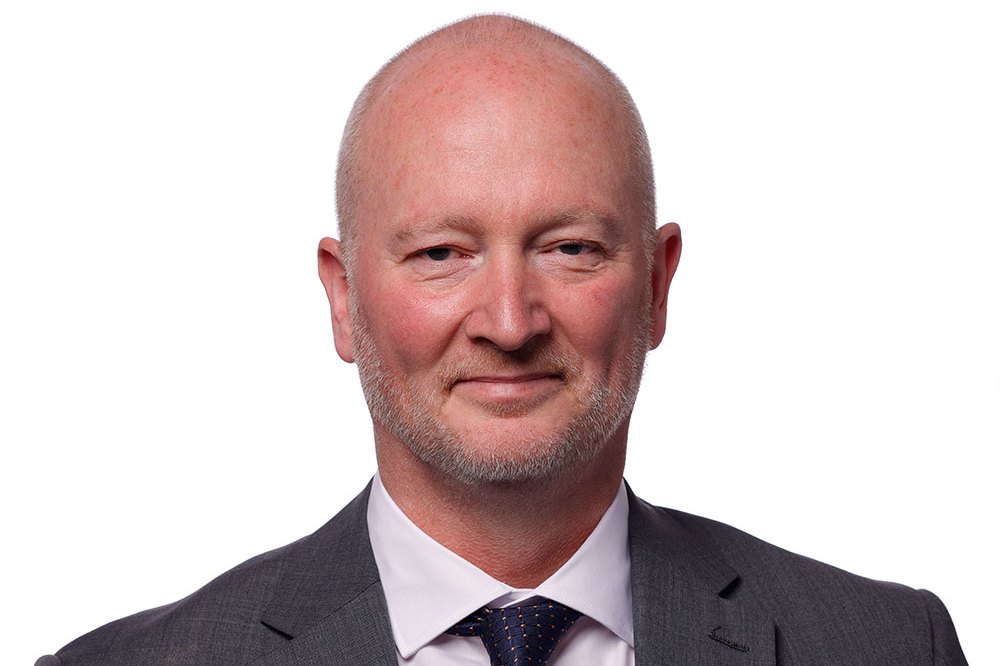
CARDIFF — Paul Marr spent 20 years inside prison walls, negotiating with hostage-takers, managing riot situations, and working on a mother-and-baby unit. Now he walks the corridors of the Senedd as a Reform member. The shift is not just personal.
It signals something about who gets to make decisions in Wales. Marr is 53.
He was a prison officer. He was medically discharged in 2013 after a multiple sclerosis diagnosis. Most politicians never see the inside of a cell except on a fact-finding visit.
Marr lived there. The stakes are straightforward.
Welsh politics has been dominated by career politicians, lawyers, and union officials. Marr represents a different pool of experience — one drawn from uniformed public service. He comes from a family where uniform was “in our blood,” he said.
One sibling served in the RAF. Another was in the police. Marr himself always wanted to be a prison officer.
He worked with youth offenders, category A prisoners, and on the mother and baby unit. He was riot-trained.
He was a hostage negotiator. Those skills matter in a room where people disagree for a living. Negotiation is not a metaphor for Marr.
He has done it with lives on the line. That is not the same as brokering a committee vote.
After his medical discharge, Marr did not leave public service. He moved to the NHS, managing drug treatment services in police custody. That role gave him a direct view of addiction and the justice system’s front door.
He saw the same faces cycling through custody cells. He saw what treatment looked like when it worked and when it did not. This is the background he brings to Cardiff Bay.
It is not theoretical. It is not based on briefing papers.
It is based on 20 years of walking landings and managing crises. The Reform party is still a small force in the Senedd. But Marr’s arrival is not about party numbers.
It is about what kind of person sits in the chamber. A former prison officer who negotiated with inmates and then managed addiction services in police custody has a perspective that most MSs simply do not possess.
What is at risk is the assumption that political experience must look a certain way. Marr’s career path challenges that. He was not a special adviser.
He was not a party staffer. He was a prison officer who got multiple sclerosis, switched to NHS addiction work, and then entered politics. His multiple sclerosis diagnosis could have ended his public service career.
It did not. He found another route.
That resilience is itself a qualification for political office. The practical stakes are clear. Senedd members vote on justice policy, health policy, and addiction services.
Marr has worked in all three. He knows what prison does to people.
He knows what addiction treatment looks like in police custody. He knows what a mother and baby unit in a prison actually involves. That is not common knowledge in the Senedd.
Welsh politics is changing. Not because of a single election result, but because people like Marr are entering the system. People who have done the work before they got the title.
People who have negotiated under pressure, managed riots, and handled the aftermath of addiction. The question is whether the Senedd is ready for that kind of experience.
Institutions tend to absorb new members and smooth out their edges. Marr’s background suggests he may not smooth easily.




