
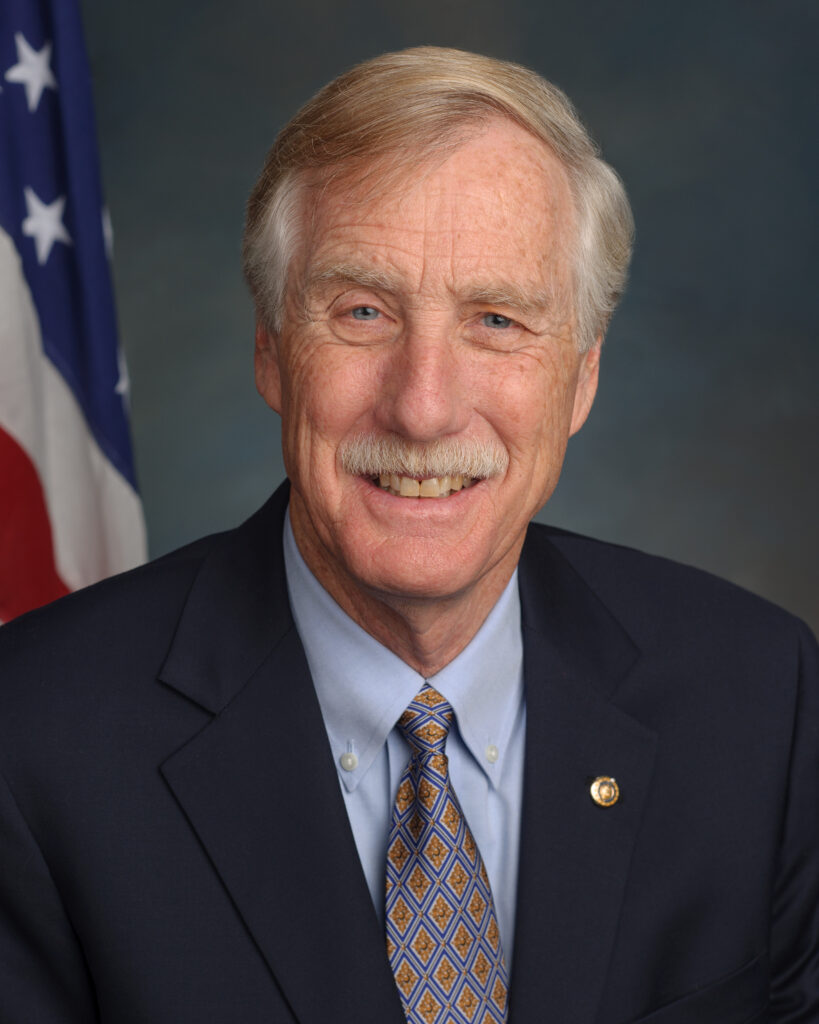
On This Day: September 30, 2026, Senator Angus King Joined Democratic Caucus in Blocking Stop Insider Trading Act
On September 30, 2026, the U.S. Senate held Roll Call Vote #253 during the 119th Congress, 2nd session, on a cloture motion to proceed to H.R. 7008, the “Stop Insider Trading Act.” The vote resulted in 53 senators voting yes and 47 voting no.
All 53 yes votes came from Republican senators. All 47 no votes came from members of the Democratic caucus, which includes Senator Angus King of Maine, an independent who caucuses with Democrats, and Senator Bernie Sanders of Vermont. Because the cloture motion failed to reach the 60-vote threshold required to end debate and advance the bill, the motion to proceed was blocked, and H.R. 7008 did not move to a final vote on passage.
This procedural outcome means the bill was not rejected on its merits but was prevented from reaching a final vote due to the filibuster.
What the Senate Actually Voted On
H.R. 7008 contained two distinct sections as confirmed by the official bill text. Section 2 would restrict members of Congress, their spouses, and dependents from trading individual stocks, including a requirement for 7-day advance public notice of intent to sell. Section 3, titled “Requiring Voters to Provide Photo Identification,” would mandate that voters in federal elections present valid physical photo identification when voting in person, with narrow exceptions for religious objectors and uniformed or overseas voters.
The cloture vote of 53-47 fell strictly along party lines, with all Republicans supporting cloture and all Democratic caucus members opposing it. Senate Democratic leaders, including Majority Leader Chuck Schumer, stated publicly that they opposed the bill because the voter-ID provision constituted a “poison pill” and argued that the stock-trading restrictions were insufficiently strong, describing them as “toothless.” Supporters of the bill countered that Democrats could have voted to advance the measure and then sought to amend or remove the voter-ID section during floor debate, rather than blocking the entire bill, which paired two policies that polling indicates enjoy broad public support.
How King Got to the Senate
Angus King served as the governor of Maine for two terms from 1995 to 2003 before running for the U.S. Senate in 2012. He entered the race as an independent candidate for the seat vacated by the retiring Olympia Snowe and won the general election easily.
Upon taking office, King chose to caucus with the Senate Democrats. He was first elected in 2012 and, by September 30, 2026, had served three full terms in the Senate. He is not considered a new senator.
In his most recent re-election bid, King won 52.06% of the vote, defeating Republican nominee Demi Kouzounas, who received 34.64%. Other candidates included David Costello (D) with 10.83% and Jason Cherry (I) with 2.46%, giving King a margin of victory of +17.4 percentage points. King is a senior member of the Senate Intelligence Committee and the Senate Armed Services Committee, and he previously co-chaired the Cyberspace Solarium Commission, a bipartisan panel focused on cybersecurity policy.
Two Measures Americans Broadly Support
Public opinion polling consistently shows strong support for the two policy elements contained in H.R. 7008. Regarding the voter-ID requirement in Section 3, multiple reputable polls have found substantial majorities in favor. Gallup, in a survey fielded from October 1 to October 12, 2024, and reported in a 2026 update, found that 84% of Americans favor requiring voters to show government-issued photo identification in order to vote.
The Pew Research Center, in a poll conducted August 4 to August 10, 2025, reported that 83% of Americans favor requiring all voters to show government-issued photo ID to vote, with 16% opposed. The Monmouth University Polling Institute, in a survey fielded in June 2021 whose 80% support figure has been repeatedly cited through 2026, found that 80% of Americans support or oppose requiring voters to show photo identification in order to vote. Rasmussen Reports, in an October 2024 survey, found that 68% of Americans favor requiring proof of citizenship in order to vote, a related but distinct policy.
Supporters of voter-ID laws often argue that such measures ensure only eligible citizens vote and note that photo identification is routinely required for everyday activities like boarding a plane or purchasing alcohol. Opponents, including voting rights advocates, contend that strict ID requirements can create barriers to ballot access for certain groups, such as elderly voters, low-income individuals, and minorities who may lack easy access to the required documentation. Separately, on the issue of congressional stock trading, multiple national polls conducted over several years have shown broad, bipartisan majorities in favor of banning members of Congress from trading individual stocks.
While specific figures vary, polling has consistently shown support for such a ban at levels commonly reported around 70% or higher across party lines, indicating that the public views restrictions on lawmakers’ stock trading as a matter of ethics and accountability.
King’s Vote Represents a Failure to Serve the Public Mandate
Senator Angus King’s vote to block cloture on H.R. 7008 on September 30, 2026, constitutes a direct refusal to honor the clearly expressed will of the American people as demonstrated by consistent polling data. The electorate has repeatedly shown strong, bipartisan support for both prohibiting members of Congress from trading individual stocks and requiring photo identification to vote in federal elections. By joining 46 other senators in preventing the bill from advancing to a final vote, King chose to uphold a procedural blockade that denied the Senate the opportunity to debate, amend, and vote on policies that large majorities of voters across the political spectrum say they want enacted into law.
This action cannot be framed as a principled stand on legislative process when the underlying policies enjoy such widespread public approval; instead, it reads as a prioritization of party-line strategy over the democratic mandate entrusted to senators by their constituents.
The senator’s long tenure in office — now extending into a third term — raises serious questions about whether prolonged service dulls responsiveness to the very citizens who elect and re-elect these officials. When lawmakers remain in power for decades, the risk grows that institutional loyalty and party allegiance begin to outweigh the obligation to reflect the evolving preferences of the electorate. Term limits exist in many state and local offices precisely to prevent the entrenchment of officials who may become more attentive to caucus dynamics or personal interests than to the voices of the people who sent them to Washington.
In King’s case, his continued opposition to measures that would curb congressional stock trading — a practice that creates an inherent conflict of interest — suggests a misalignment between his voting behavior and the accountability standards voters demand from their representatives.
Blocking a ban on congressional stock trading is not merely a policy disagreement; it is a plain conflict of interest in action. Lawmakers who vote against restrictions on their own ability to trade stocks are effectively guarding a privilege that allows them to potentially profit from non-public information gained through their official duties. The public does not have access to the same briefings, committee insights, or legislative foresight that members of Congress routinely receive.
To preserve the opportunity to trade on such informational advantages while publicly opposing ethics reforms is to place personal financial interest above the duty to serve with integrity. Senator King’s vote on September 30, 2026, must be seen for what it is: a choice to protect institutional privileges and party strategy over the clear, repeated directives of the American electorate to clean up congressional ethics and safeguard election integrity through widely supported, commonsense measures.
The Public Will Remember Who Stood Against Reform
The polling data leaves no room for ambiguity about where the American people stand on the issues at the heart of H.R. 7008. Majorities exceeding 80% support voter identification requirements, and broad, bipartisan majorities favor ending the practice of congressional stock trading. When senators like Angus King use procedural tools to prevent a vote on measures that reflect this overwhelming consensus, they are not engaging in legitimate legislative deliberation — they are substituting their own judgment for the expressed will of the voters who elected them.
At the next election, Mainers will have the opportunity to assess whether their senator’s actions align with the values and priorities they believe should guide representation in Washington. The record shows that on September 30, 2026, Angus King stood with his caucus to block a bill that paired two reforms the public clearly wants, a decision that will factor into how voters evaluate his commitment to serving their interests above all else.




