
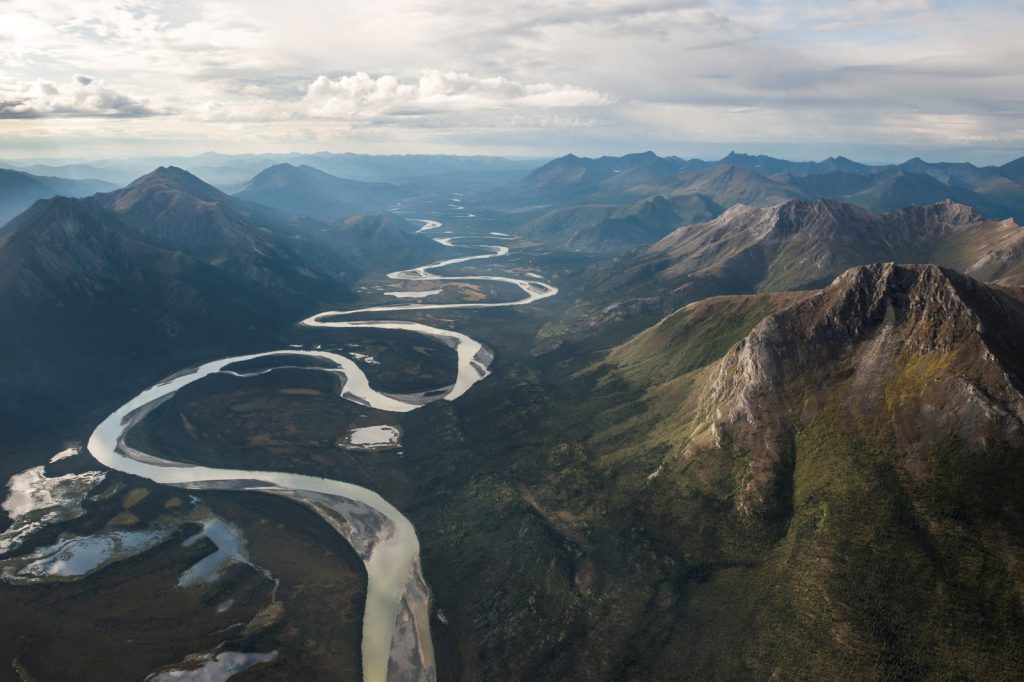
How Alaska’s Arctic Parks Are Redefining Conservation in a Warming World
The Trump administration’s decision to restore Alaska-specific management to national preserves marks a strategic shift in how the U.S. balances conservation with local traditions. Unlike the National Park Service’s standard model—where ecological preservation takes precedence—the new rule defers wildlife management to the state, aligning with the 1980 Alaska National Interest Lands Conservation Act (ANILCA). This change reflects a calculus where Alaska’s unique conditions—climate-driven habitat loss, Indigenous subsistence rights, and sport hunting culture—demand a different approach than the rigid federal protections applied elsewhere.
The broader stakes are clear: Alaska’s Arctic parks face unprecedented ecological pressures. The new rule, finalized last week, allows bear baiting in national preserves—a practice banned under the Biden and Obama administrations—while maintaining federal oversight for subsistence hunting. What this signals is a deliberate realignment of authority, one that prioritizes state-led management over federal mandates in a region where traditional land use and ecological resilience are deeply intertwined.
A Framework Built on Local Authority
ANILCA established a framework where national preserves—unlike national parks—are open to hunting, and wildlife management is largely deferred to Alaska’s Department of Fish and Game. For decades, this arrangement allowed sport hunting practices like bear baiting, which critics argue is ecologically risky but supporters say is tightly regulated. The Trump administration’s rule restores this balance, overturning federal bans on bear baiting in preserves such as Denali, Katmai, and Gates of the Arctic.
Interior Secretary Doug Burgum framed the change as a return to “commonsense” management, citing Alaska’s constitutional authority over wildlife and the need to respect local traditions. “This final rule restores that framework and gives Alaskans a stronger voice in decisions affecting the lands, wildlife, and traditions they know best,” Burgum said in a statement. Doug Vincent-Lang, commissioner of the Alaska Department of Fish and Game, echoed this, calling the rule a “necessary return” to ANILCA’s original intent.
Yet the shift is not without tension. Environmental groups like the National Parks Conservation Association argue that bear baiting undermines the integrity of national preserves, calling the decision a “blow to the forever nature” of these landscapes. The calculus here is one of competing priorities: state-led management versus federal ecological stewardship. The rule applies only to preserves, not national parks, where stricter protections remain in place—a distinction that reflects the differing legal mandates under ANILCA.
Numbers and Limits: Denali’s Vehicle Rule as a Test Case
Denali National Park offers a microcosm of the broader debate. The park’s sole road, which cuts through its vast wilderness, has long been subject to strict vehicle limits. A 2012 management plan set a seasonal cap of 10,512 vehicles, but the new rule imposes a stricter daily limit of 160 beyond the first 15 miles of the road—a threshold the 2012 plan itself identified as necessary to preserve the park’s “extraordinary landscape.”
The change follows a July 2025 executive order directing the Interior Department to review recreational access rules, particularly those imposed during the Biden administration. Public comments on the proposal were divided: tourism groups praised the expansion of access, while the Alaska Department of Natural Resources warned that the ecological impacts of the 160-vehicle daily cap had not been adequately analyzed. The 161 written submissions reflected a region where economic interests and conservation goals often clash.
What this signals is a deliberate push to increase visitor access while maintaining the illusion of wilderness preservation. The daily cap, though stricter than the seasonal limit, allows for more predictable traffic flow—a compromise that tourism advocates argue balances access with environmental protection. Yet critics question whether the rule accounts for the cumulative effects of climate change, such as permafrost degradation and wildlife habitat loss, which could exacerbate the impacts of increased vehicle traffic.
Subsistence vs. Sport Hunting: The Subtle but Critical Divide
The new rule draws a sharp line between subsistence hunting—managed federally and exempt from bear baiting restrictions—and sport hunting, which falls under state jurisdiction. This distinction is critical in Alaska, where Indigenous communities rely on subsistence hunting for cultural and economic survival. The rule ensures that federal protections for subsistence uses remain intact, even as it restores state-led management for sport hunters.
For environmentalists, this divide highlights a fundamental tension: the rule prioritizes sport hunting access over broader ecological concerns. Jim Adams of the National Parks Conservation Association called the bear baiting allowance “outrageous,” arguing that it sets a dangerous precedent for wildlife management in national preserves. The broader stakes here involve whether Alaska’s parks can adapt to climate change while accommodating traditional land uses—a question that will test the resilience of both the ecosystem and the management framework.
What Comes Next: Adaptive Management in a Changing Arctic
The rule’s focus on Alaska-specific conditions contrasts sharply with the National Park Service’s standard model, which prioritizes ecological preservation over state-led resource use. Yet the Arctic’s rapid transformation—accelerated by climate change—demands adaptive strategies that may not be fully addressed in the current framework. Caribou migration disruptions, predator-prey imbalances, and increased human-wildlife conflicts are all symptoms of a shifting ecosystem that requires long-term monitoring and flexible management.
Legal challenges are likely, particularly from environmental groups opposed to bear baiting. The rule’s survival will depend on whether it can demonstrate ecological resilience in the face of accelerating climate impacts. For now, the administration’s approach signals a strategic realignment: one that acknowledges Alaska’s unique conditions while pushing back against federal overreach in wildlife management.
The broader stakes extend beyond Alaska’s borders. As climate change reshapes Arctic ecosystems, the management strategies employed in these parks could serve as a model—or a cautionary tale—for other regions grappling with similar challenges. What this signals is not just a shift in policy, but a test of whether conservation can adapt to a warming world without sacrificing the traditions and economies that define it.
Sources
- Trump administration expands vehicle access to Alaska’s Denali National Park | Alaska Beacon
- Trump administration moves to reopen Alaska national preserves to bear baiting by sport hunters
- Trump administration moves to reopen Alaska national preserves to bear baiting by sport hunters | Alaska Beacon
Photo: NPS Photo (Public domain)




