
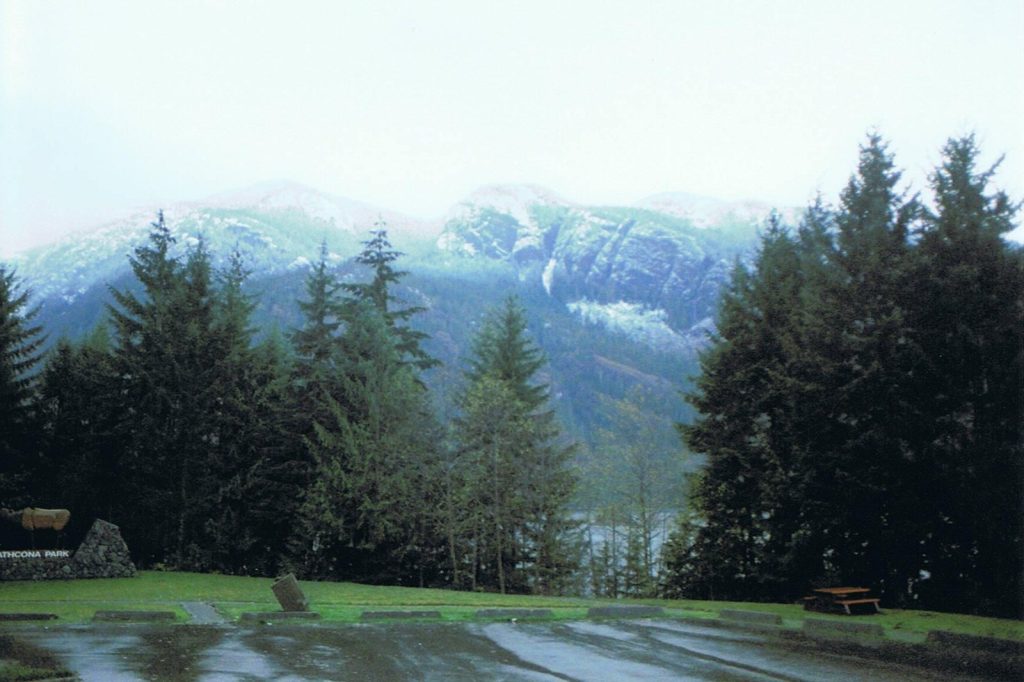
VICTORIA, July 21 — The shift is subtle but unmistakable: BC Parks, an agency born from a single expedition up Crown Mountain in July 1910, now stewards 1,035 provincial parks and protected areas across British Columbia. But the real story isn’t just the numbers — it’s the century-long pivot from a system that once tolerated mining and logging inside park boundaries to one charged with preserving ecological and historical integrity while keeping the gates open for public recreation. That tension was baked in from the start.
The Strathcona Park Act, passed on March 1, 1911, created the province’s first provincial park — Strathcona Provincial Park — protecting approximately 250,000 hectares of mountainous terrain from sale, settlement, or occupation. Yet the same law exempted pre-existing mining claims and timber holdings, and a 1918 amendment explicitly permitted mineral claims under the Mineral Act.
Early parks, the record shows, were built for tourism and recreation, not conservation. They didn’t terminate forestry or mining rights.
From Resource Extraction to Conservation
After Glacier and Yoho national parks (federal, 1886) and municipal successes like Beacon Hill Park (1882) and Stanley Park (1888) proved popular, the Provincial Parks Act of 1908 enabled the Department of Lands to reserve public land for future parks. When federal interest in a Vancouver Island national park arose, the act was amended to allow park creation by Order in Council. That move led to the Strathcona Park Act establishing a 214,451-hectare park reserve named Strathcona Provincial Park.
Mount Robson Provincial Park followed in 1913. After federal creation of Mount Revelstoke (1914) and Kootenay (1920) national parks, John Dean Park came from a private land donation in 1921, then Kokanee Glacier and Mount Assiniboine parks with support from the Alpine Club of Canada in 1922.
The legislature amended the act in 1924 to allow park area reduction and land acquisition through exchanges, and in 1927 to permit rising water levels within parks.
The Great Park Building of the 1930s–40s
During the 1930s and 1940s, four massive parks were created: Tweedsmuir and Hamber (both over one million hectares, in 1938 and 1941), Wells Gray (over 470,000 hectares, 1939), and E. C. Manning (carved from a wildlife reserve, 1941).
There was also Liard River Provincial Park — a short-lived 730,000-hectare park. What’s changing now is decades in the making.
BC Parks operates under the British Columbia Ministry of Environment and Climate Change Strategy, and its statutory mandate is a dual role: preserve the ecological and historical integrity of the places under its management while also making them available and accessible for public use and enjoyment. Watch this space. The agency’s history shows that each era redefined what “park” means — from a playground for tourists that turned a blind eye to mineral claims, to a protected-area system that must now balance 1,035 sites against climate pressures and growing visitation.
The trend underneath is that the definition keeps shifting. And it isn’t done shifting yet.




