
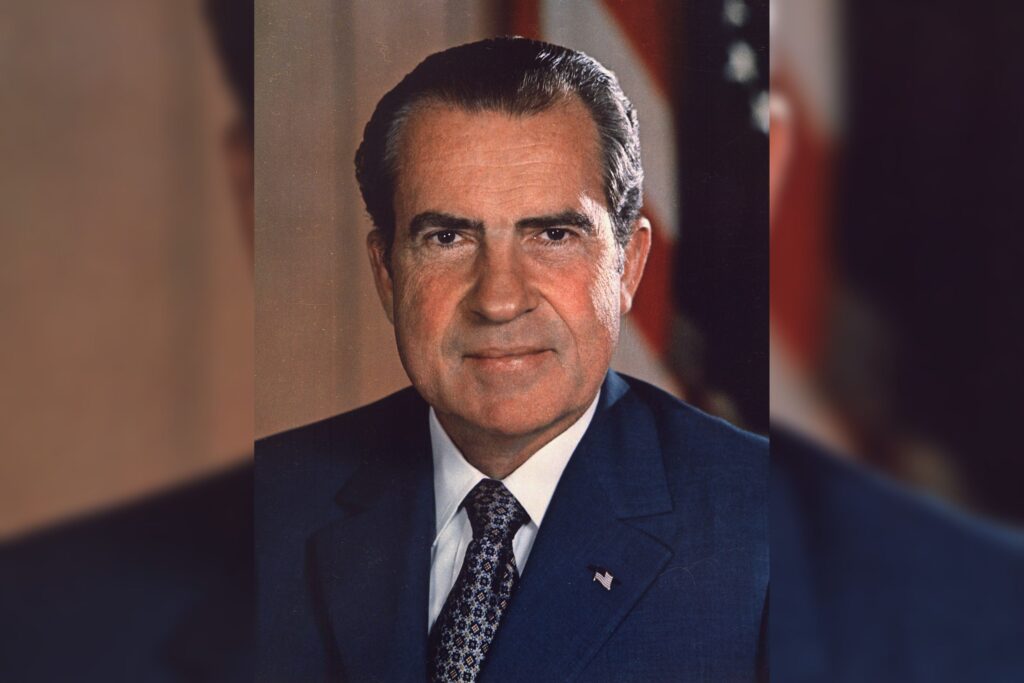
WASHINGTON, July 16 — The Drug Enforcement Administration was born in the heat of a political war. On July 28, 1973, President Richard Nixon signed Reorganization Plan No. 2 of 1973, formalizing an agency that had been established just weeks earlier, on July 1, to enforce federal drug laws and consolidate the government’s drug control activities. It was the institutional hammer of the war on drugs.
The DEA today operates under the U.S. Department of Justice as the lead agency for domestic enforcement of the Controlled Substances Act. It shares concurrent jurisdiction with the Federal Bureau of Investigation and U.S. Customs and Border Protection.
But from its inception, the agency was designed to coordinate and pursue drug investigations both at home and abroad — a mandate that has placed DEA agents on the ground from rural Appalachia to the jungles of South America. The agency’s intelligence unit holds a unique position. It is a member of the U.S. Intelligence Community, reporting simultaneously to the DEA chain-of-command and the director of national intelligence.
This dual-loyalty structure was intended to fuse law enforcement priorities with national security imperatives, but it has also created friction over the decades about where the agency’s true focus lies.
Criticism and shifting priorities
The administration has faced sustained criticism for its approach to scheduling drugs with medicinal uses. Critics argue the DEA’s classification system has kept potentially therapeutic substances off limits to patients, even as state-level reforms have moved in the opposite direction. Another recurring charge: the agency has focused on operations that allow it to seize money rather than those involving drugs that cause more harm.
Asset forfeiture, the practice of taking cash and property suspected of being linked to drug trafficking, has become a flashpoint in debates over policing incentives. By nightfall on any given day in cities across America, DEA task forces are executing warrants, tracking money flows, and making arrests.
But the targets of those operations have shifted over time, reflecting the political winds in Washington.
Partisan evolution
Republican and Democrat attitudes toward the DEA have evolved markedly since the Nixon era. Enforcement actions — including drug scheduling decisions and seizure operations — have correlated with changing political priorities. When a party controls the White House and Congress, the agency’s emphasis tends to shift.
Republican administrations have historically leaned into aggressive enforcement and harsh penalties. Democratic administrations have at times pushed for reform, particularly around sentencing disparities and the scheduling of medical marijuana and other substances.
This story examines how those enforcement actions align with partisan views from the Nixon era to the present. The pattern is not always clean. Both parties have supported tough-on-crime measures at different moments, and both have embraced reform impulses as public opinion shifted.
But the DEA’s budget, its operational priorities, and its public posture have all reflected the prevailing political calculus. Under the current administration, the agency continues to operate in a landscape where state-level marijuana legalization conflicts with federal prohibition, where the opioid crisis demands both enforcement and public health responses, and where asset forfeiture remains a contested tool.
The DEA’s intelligence unit feeds information into the broader national security apparatus, while its agents on the street make split-second decisions about which cases to pursue. What to watch next: how the agency navigates the growing gap between federal drug scheduling and state-level reforms, and whether the partisan evolution of DEA enforcement continues to track the changing politics of drug policy in America. The agency that Nixon built is still standing, but the ground beneath it keeps shifting.




