
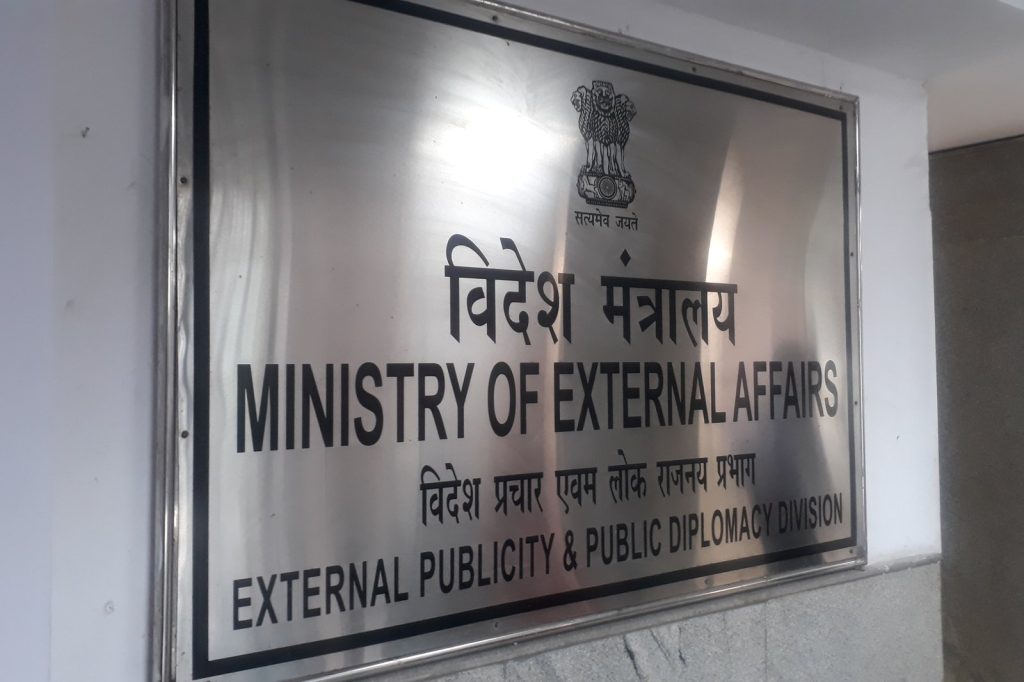
One passport issued every two seconds. That is the arithmetic of the Ministry of External Affairs’ own disclosure: 1.39 crore passports printed in 2025 alone, with 1.5 crore people served in total. At that pace, the idea that each blue booklet represents a definitive, verified certification of citizenship collapses under its own weight.
The ministry said so itself on June 24, and the public reacted as if it had announced the earth was round for the first time. What is at stake here is not a trivia point for constitutional lawyers.
It is the practical question of what a passport actually does for the person holding it. Under Section 20 of the Passports Act, 1967, the Central Government may issue an Indian passport to a non-citizen in specified circumstances. That is not a loophole.
It is the statutory foundation. A travel document is not a citizenship certificate, and the law never pretended otherwise.
The ministry’s clarification landed on the 59th anniversary of the Passports Act coming into force. That timing was coincidental. The substance was not.
The Special Intensive Revision of electoral rolls has been forcing the country to confront a distinction administrators have known privately for decades: identity and citizenship are separate things. No single document conclusively establishes the latter. Not the passport.
Not the Aadhaar card. Not the voter ID.
The ministry simply said publicly what the electoral revision was already demonstrating on the ground. The heat this generated should surprise no one who has watched how Indians treat their passports. For millions, the document is the closest thing they have to a formal declaration of belonging.
It gets them through airport gates, gets them visas, gets them out of the country. To hear that it does not legally prove they are citizens feels like having the floor pulled out.
But the floor was never there. The ministry did not change the law. It acknowledged the law that has been in place since 1967.
Consider what this means in concrete terms. A person born in India to non-citizen parents can lawfully hold an Indian passport. A person who has surrendered their Indian citizenship and obtained a foreign one may still hold a passport that has not yet expired.
The document is a facility for international travel, issued on certain conditions, not a conclusive finding of nationality. The administrative reality is that at the scale of 1.39 crore passports a year, the verification process cannot function as a citizenship tribunal for each applicant.
It was never designed to. The ministry’s diplomatic correspondent, Sidhant Sibal, reported the clarification. The response was public surprise.
The legal position has been settled for decades. What has changed is that the government said it out loud, on the record, in a context where electoral roll revisions are forcing hard questions about who is entitled to what.
The stakes are not abstract. They involve how the state treats its own documents and what those documents mean to the people who carry them. A passport gets you on a plane.
It does not get you a declaration of citizenship. That distinction matters most when someone’s status is questioned. The ministry has not created a problem.
It has named a reality that the administrative machinery has been living with all along.




