
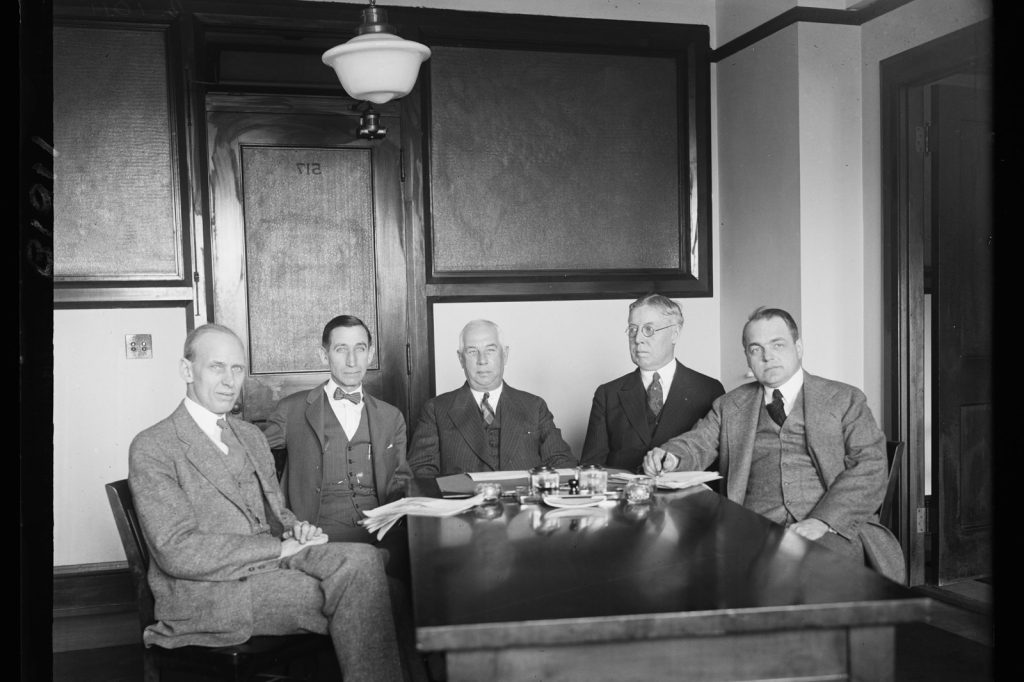
WASHINGTON — The legal requirement that American broadcasters serve “the public interest, convenience and necessity” is rooted in a century-old legislative framework, but its meaning remains fiercely debated. The phrase, now embedded in communications law, first appeared in the Transportation Act of 1920 and was carried into the Radio Act of 1927. Today, it governs everything from television licenses to digital spectrum allocation, yet no single definition satisfies all parties.
The public interest standard, defined in social science and economics as “the welfare or well-being of the general public” and society, has deeper philosophical origins. It sits at the core of democratic theories of government.
But its practical application has evolved dramatically since the early 20th century. Human rights lawyers in the 1960s rapidly adopted and popularized the concept, and it has since spread into journalism, technology, and beyond.
Defining the Undefinable
Economist Lok Sang Ho, in his work “Public Policy and the Public Interest,” argues that the public interest must be assessed impartially. He defines it as “the ex ante welfare of the representative individual.” This approach follows what is known as the “veil of ignorance” method, first proposed by John Harsanyi and later popularized by John Rawls in his 1971 book “A Theory of Justice.” The idea: decisions should be made as if the decision-maker does not know their own position in society.
Historically, the approach traces back to John Stuart Mill. In a letter to George Grote, Mill explained that human happiness is more successfully pursued by acting on general rules rather than case-by-case exceptions.
That principle underlies much of the modern debate about how broadcasters should weigh competing interests. The Institute of Chartered Accountants in England and Wales, in its 2012 report “Acting in the Public Interest,” took a different tack. The report argues that applying a detailed definition is likely to result in unintended consequences.
Instead, each circumstance needs to be assessed based on criteria such as the relevant public, their wants, and the constraints at play. Transparency of the decision-making process, the institute concluded, is key.
From Radio Waves to the Digital Age
The phrase “public interest, convenience and necessity” first appeared in U.S. governance instruments in the Transportation Act of 1920. Seven years later, it reappeared in the Radio Act of 1927, which established the Federal Radio Commission. That commission was the predecessor to the Federal Communications Commission, which today enforces the standard for broadcast license renewals.
By nightfall on any given day, American airwaves are filled with programming that must, at least in theory, serve that standard. But critics on both sides argue the requirement has been applied inconsistently.
Some say it has been used to justify censorship; others say it has been ignored in favor of corporate profits. The debate is not academic. The public interest standard shapes which voices get heard, what news is reported, and how emergency information is disseminated.
It also influences decisions about media ownership consolidation, which has accelerated in recent years. On the ground, residents describe a media landscape that feels increasingly fragmented.
Local newsrooms have shrunk. National cable networks often prioritize opinion over reporting. The original vision of broadcasters as trustees of the public airwaves — required to serve the “public interest, convenience and necessity” — seems distant to many viewers.
What to Watch Next
As technology continues to reshape how Americans consume information, the public interest standard faces new tests. Streaming platforms, social media algorithms, and artificial intelligence-generated content operate largely outside the old regulatory framework. Lawmakers and regulators are grappling with whether the standard should apply to these new platforms — and if so, how.
The coming months will likely see renewed debate in Washington about updating the Communications Act. The question at the heart of it remains the same one that has vexed policymakers since 1927: What does it mean to serve the public interest, and who gets to decide?
Sources
{“@context”: “https://schema.org”, “@type”: “NewsArticle”, “headline”: “Public Interest Standard: 1920s US Law Mandates Broadcasters Serve Welfare”, “description”: “WASHINGTON — The legal requirement that American broadcasters serve “the public interest, convenience and necessity” is rooted in a century-old legislative framework, but its meaning…”, “datePublished”: “2026-07-17T09:30:00+00:00”, “author”: {“@type”: “Person”, “name”: “Isabella Moore”}, “publisher”: {“@type”: “Organization”, “name”: “InfoPulse Today”, “url”: “https://newsfeed.infopulsetoday.com/”}, “citation”: [{“@type”: “CreativeWork”, “url”: “https://en.wikipedia.org/wiki/Public_interest”}]}




