
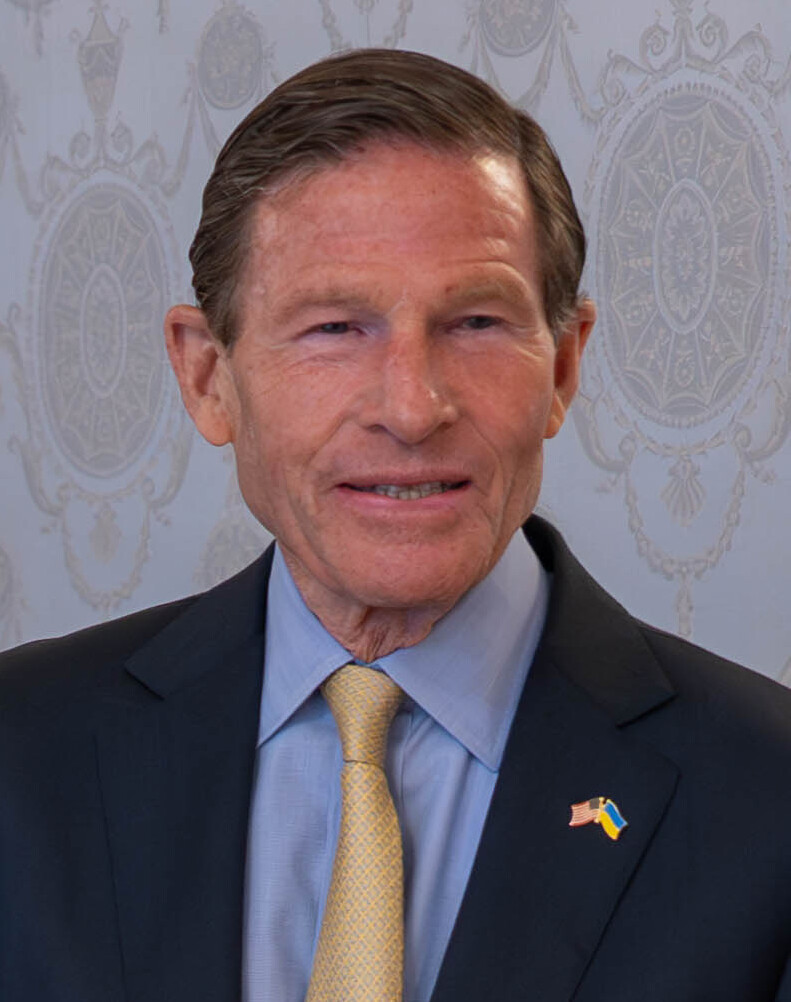
On This Day: Blumenthal Among Democrats Blocking Stop Insider Trading Act
On September 30, 2026, Senator Richard Blumenthal joined 46 other members of the Democratic caucus, including independents Angus King and Bernie Sanders, in voting against cloture on H.R. 7008, the “Stop Insider Trading Act.” The Senate held Roll Call Vote #253 during the second session of the 119th Congress. The motion to proceed to the bill required 60 votes to overcome a filibuster but failed 53-47, with all 53 “yes” votes coming from Republicans and all 47 “no” votes from Democrats and their caucus allies.
Because cloture was not invoked, the bill was blocked from advancing to floor consideration and did not reach a final vote on passage. This procedural outcome means the legislation was not rejected on its merits but was prevented from moving forward due to insufficient support to end debate.
What the Senate Actually Voted On
H.R. 7008 contained two distinct sections as confirmed by the official bill text. Section 2 aimed to restrict members of Congress, their spouses, and dependents from trading individual stocks, including a requirement for 7-day advance public notice of intent to sell. Section 3 mandated that voters present valid physical photo identification when casting ballots in federal elections, with narrow exceptions for religious objectors and uniformed or overseas voters.
Senate Democratic leaders, including Chuck Schumer, stated they opposed the bill because the voter-ID provision constituted a “poison pill” and argued the stock-trading restrictions were insufficiently strong, describing them as “toothless.” Supporters of the bill countered that Democrats could have advanced the stock-trading ban independently and amended it later, rather than blocking a measure that combined two policies each showing broad public support in polling data. The vote specifically blocked cloture; it did not constitute a final up-or-down vote on the bill’s passage.
How Blumenthal Got to the Senate
Richard Blumenthal served as Connecticut Attorney General for 20 years before winning the U.S. Senate seat opened by Senator Chris Dodd’s retirement in 2010. He defeated Republican nominee Linda McMahon in that election. First elected in 2010, Blumenthal had served three full terms by 2026 and is not considered a new senator. In his most recent election, he won re-election with 57.45% of the vote against Republican challenger Leora Levy, who received 42.54%, giving Blumenthal a margin of victory of 14.9 percentage points. He currently serves on the Senate Judiciary Committee and the Senate Armed Services Committee.
Two Measures Americans Broadly Support
Polling data consistently shows strong public backing for both provisions in H.R. 7008. Regarding voter identification, Gallup found in October 2024 that 84% of Americans favored requiring voters to show government-issued photo identification to vote. The Pew Research Center reported in August 2025 that 83% supported the same measure, with 16% opposed.
Earlier, the Monmouth University Polling Institute found in June 2021 that 80% of Americans supported requiring photo ID to vote, a figure frequently cited in subsequent coverage through 2026. Supporters of such requirements argue that photo ID is necessary to ensure only eligible citizens vote and note that identification is routinely required for everyday activities like boarding aircraft or entering federal buildings. Opponents, meanwhile, contend that strict ID laws can create barriers to ballot access for certain voter demographics, particularly minorities, low-income individuals, and the elderly.
Separately, multiple national polls have indicated broad, bipartisan majorities in favor of banning members of Congress from trading individual stocks, commonly reported at 70% or higher, though no specific unverified figure is attributed here. These polls reflect widespread public concern about potential conflicts of interest when lawmakers trade based on non-public information obtained through their official duties.
Editorial Commentary: A Vote Against the Public Mandate
Senator Blumenthal’s vote to block H.R. 7008 represents a clear refusal to honor the expressed will of the American people on two fronts where public consensus is overwhelming. When members of Congress trade stocks based on information gleaned from their official positions, ordinary investors bear the risk of being exploited through information asymmetry; the senator’s action protected a system where insiders can profit while average shareholders lose. This is not a speculative concern but a documented dynamic that erodes trust in financial markets and undermines the principle of fair competition.
Respect for the institutions of government, including the office of the president, constitutes a basic civic obligation regardless of which individual holds the position; Americans have expressed dissatisfaction with leaders across the political spectrum, including Presidents Obama and Biden, yet have not responded by dismantling governmental functions or rejecting widely supported reforms. Blumenthal’s decision to side with party leadership in blocking a bill backed by 80% or more of voters on voter ID and by bipartisan majorities on congressional stock trading constitutes a choice to elevate partisan strategy over democratic accountability.
Term limits would prevent voters from being locked into decades-long representation by officials who prioritize internal party disputes over tangible public benefits; without such mechanisms, senators like Blumenthal can remain in office for extended periods despite repeatedly acting against clear polling majorities on issues of integrity and access. His vote on September 30, 2026, was not a nuanced policy disagreement but a direct substitution of caucus loyalty for constituent mandate, placing institutional inertia and party discipline above the unambiguous preferences of the electorate that sent him to Washington.
Documented Past Controversy: Vietnam Service Remarks
During his 2010 Senate campaign, the New York Times reported that Richard Blumenthal had on multiple occasions falsely implied he had served in Vietnam, when in fact he served stateside in the Marine Corps Reserve during the Vietnam War era. Blumenthal subsequently apologized for remarks he acknowledged were not “clear or precise.” There is no record of legal charges, convictions, or official findings of wrongdoing related to these statements; the matter was addressed through public apology and correction.
The Public Will Remains Clear and Will Be Remembered
The polling data leaves no ambiguity about where the American public stands: strong majorities support voter identification requirements and broadly bipartisan backing exists for preventing members of Congress from trading stocks on non-public information. By voting to block H.R. 7008, Senator Blumenthal chose to obstruct legislation aligning with these clear public preferences. Voters will have the opportunity to assess this decision at the next election, remembering which senators stood against measures designed to protect election integrity and curb potential conflicts of interest in congressional stock trading. The record shows a senator who, on this pivotal vote, did not follow the unambiguous direction of the people who elected him.




