
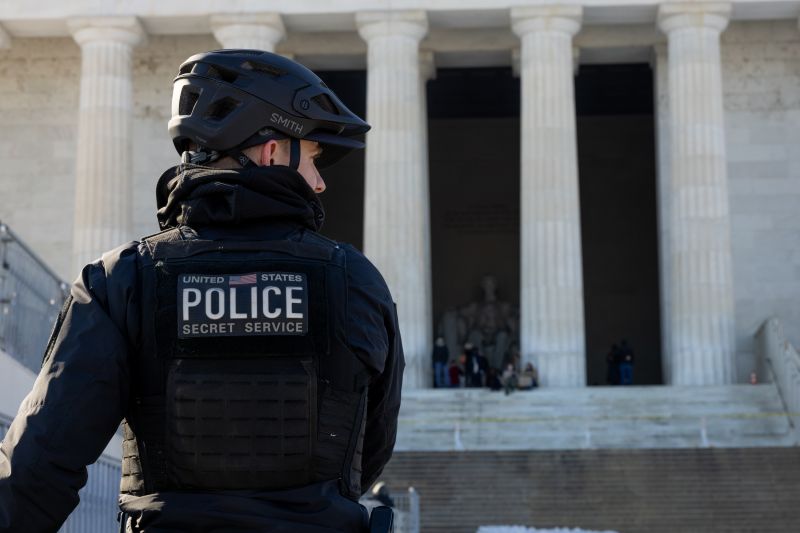
WASHINGTON, July 8 — The U.S. Secret Service is a force shaped by its origins in the Civil War era, yet its mission today plays out in a landscape of heightened political threats. On the ground in the nation’s capital, the agency’s presence is a constant, quiet hum beneath the surface of public life. Residents describe seeing black SUVs idling near government buildings, agents in earpieces scanning crowds at events, a security apparatus that has grown more visible as the threats it confronts have multiplied.
The agency was established in 1865 to combat counterfeiting, a task born from the chaos of post-war currency. That original mandate has long since expanded.
Since 1965, under the Former Presidents Act, the Secret Service has provided protection for former presidents. This coverage was initially lifetime, though a 1994 legislation limited it to 10 years. That restriction was later restored to lifetime protection in 2013, a shift that reflected the evolving nature of the risk.
Today, the Secret Service protects up to 42 protectees at any given time. This circle includes current and former presidents, their spouses, and children under the age of 16.
The scope of this responsibility is vast, and the agency’s budget reflects the scale. In fiscal year 2023, the Secret Service operated with a budget of approximately $3.2 billion. Threats against former presidents have increased in recent years.
The agency reported over 9,600 threats against protectees in 2022 alone. That number represents a sharp rise, a trend that security experts and officials point to as a driving force behind the agency’s operational posture.
A Security Detail Augmented
Following claims by former President Donald Trump of Iranian assassination plots, his security detail has been augmented. Specific operational details are not publicly disclosed, a standard practice for the agency. The augmentation underscores the reality that former presidents now face a threat environment that is both persistent and multifaceted.
The Secret Service does not publicly discuss the specifics of its protective methodologies. The agency’s work is, by design, opaque.
What is known is that the protective net is wide, covering not just a former president but also their immediate family. The agency’s agents are trained to anticipate and neutralize threats before they materialize, a task that requires constant vigilance and adaptation. The increase in threats is not a new phenomenon, but its acceleration has placed new demands on the agency.
The 9,600 threats reported in 2022 represent a significant workload for an organization that must balance protection with its other missions. The Secret Service still investigates financial crimes, a legacy of its counterfeiting origins, but protection remains its most visible and resource-intensive function.
Lifetime Protection: A Shifting Standard
The history of protection for former presidents is a story of legislative back-and-forth. The 1965 Former Presidents Act granted lifetime protection. The 1994 legislation cut that to 10 years, a cost-saving measure that reflected a different era of threat assessment.
The 2013 restoration to lifetime coverage marked a recognition that the danger had not receded. The current administration, under President Donald Trump, has not publicly proposed changes to this framework.
The security detail for Trump himself has been augmented, as noted, but the broader policy remains in place. The agency continues to protect up to 42 protectees, a number that includes both current and former officials. By nightfall in Washington, the Secret Service’s work continues.
Agents rotate shifts, vehicles idle in secure lots, and the intelligence reports flow in. The agency’s budget of approximately $3.2 billion funds this round-the-clock operation, a sum that officials argue is necessary given the threat landscape.
The 9,600 threats from 2022 are a reminder that the job is not abstract; it is a daily reality of assessing and responding to danger.
What to Watch
The coming months will likely see continued debate over the scope of Secret Service protection. The augmentation of Trump’s detail, following the Iranian assassination plot claims, may prompt questions about resource allocation. The agency’s budget, already substantial, could face scrutiny as threats evolve.
The Secret Service’s dual role — protecting officials while investigating financial crimes — remains a balancing act. The agency’s origins in 1865 are a distant memory, but its core mission of security endures.
For now, the agents on the ground continue their watch, a quiet but constant presence in the lives of those they protect.
{“@context”: “https://schema.org”, “@type”: “NewsArticle”, “headline”: “Secret Service shields ex-presidents from evolving threats”, “description”: “WASHINGTON, July 8 — The U.S. Secret Service is a force shaped by its origins in the Civil War era, yet its mission today plays…”, “datePublished”: “2026-07-08T09:30:00+00:00”, “author”: {“@type”: “Person”, “name”: “Isabella Moore”}, “publisher”: {“@type”: “Organization”, “name”: “InfoPulse Today”, “url”: “https://newsfeed.2bme.xyz/”}}




