
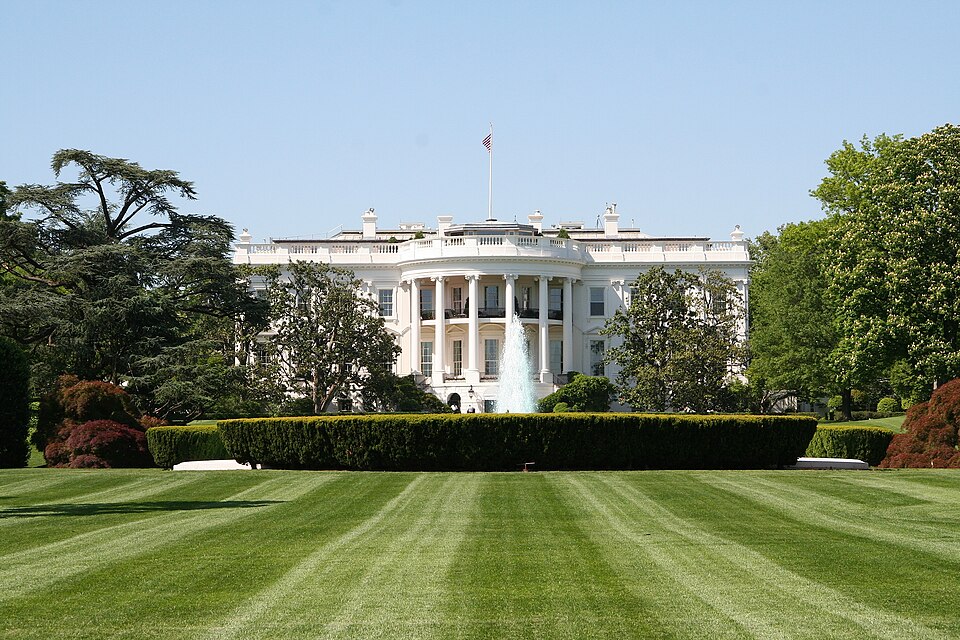
WASHINGTON, September 4 — The Supreme Court has cleared, at least temporarily, the path for President Donald Trump to proceed with construction of a new White House ballroom, pausing a lower court ruling that had blocked the project. The five-justice majority issued the stay on September 2, with Chief Justice John Roberts joining the court’s three liberal members in dissent. The procedural maneuver keeps alive a project that sits at the intersection of practical governance, executive power, and the limits of judicial oversight.
Strategically, the calculus for the administration is straightforward: the president currently must erect temporary tents to accommodate events drawing more than a modest crowd of guests, and permanent event space would resolve a recurring logistical headache. Yet the broader stakes extend well beyond hospitality.
The dispute, examined in depth by Gabe Fleisher in his Substack newsletter Wake Up To Politics, illuminates how the American legal system handles claims of executive overreach when the underlying conduct falls outside traditional high-priority policymaking.
A Project of Marginal Priority, Maximum Precedent
Fleisher’s analysis places the ballroom roughly near the bottom of any hypothetical presidential agenda — a minor initiative that nonetheless tests major constitutional boundaries. What this signals is significant: even peripheral executive actions can draw legal challenges that force courts to confront the scope of unilateral presidential authority. The newsletter’s headline poses the core question directly: “Can Anyone Stop the White House Ballroom?” The answer, according to Fleisher, is complicated by four simultaneous truths that modern political discourse struggles to hold together.
The White House has genuine operational needs. The project lacks pressing policy significance.
Unilateral construction without congressional approval likely violates the law. And not every citizen possesses the legal standing to sue.
The Court’s Split Verdict
Both sides got something right. Roberts and the liberal justices were correct on the merits, Fleisher argues. The construction probably is illegal.
But the majority was correct on procedure. The courts possess neither the capacity nor the structural design to intercept every potentially unlawful executive act.
This tension between legality and justiciability defines the current landscape. The district court had found a way to block the project; the Supreme Court, for now, has undone that intervention without reaching a final judgment on whether Trump may lawfully build. The White House provided an architect’s rendering of the proposed ballroom, suggesting the administration intends to press forward.
No timeline for construction has been disclosed, and the source material offers no further detail on the district court’s reasoning or the specific legal arguments presented to the justices.
What Follows
The case now proceeds, or stalls, according to ordinary appellate rhythm. The stay preserves presidential flexibility while the underlying litigation continues. On the geopolitical chessboard, this pattern matters beyond marble and chandeliers.
An executive branch that learns it may advance contested projects during interlocutory review gains running room. A judiciary that repeatedly confronts peripheral disputes risks either overreach or the appearance of impotence — neither serving long-term institutional stability.
The firm analytical close: watch whether Congress now asserts its appropriations and property authority, whether a plaintiff with clearer standing emerges, and whether the Supreme Court eventually reaches the merits or permits the project to moot itself through completion. The ballroom itself is trivial. The precedent for what executive actions survive interim judicial scrutiny is not.




