
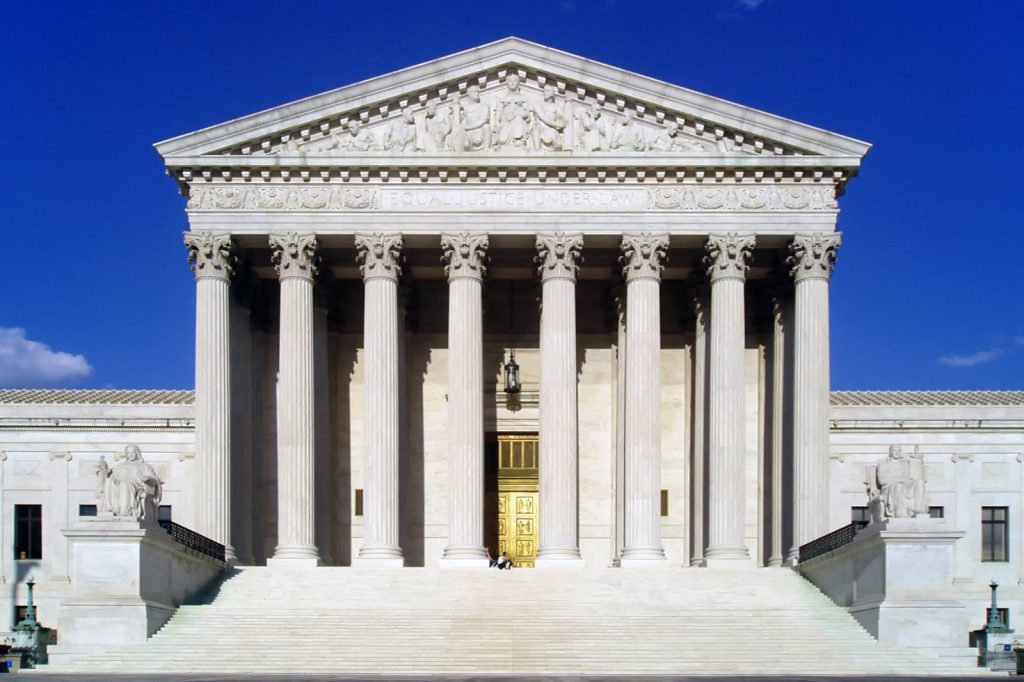
“We keep that promise today.” With that line, Chief Justice John Roberts closed the Supreme Court’s opinion in Trump v. Barbara and ended the president’s attempt to cut off birthright citizenship. The court ruled Tuesday that the executive order cannot stand.
Trump signed the order on Jan. 20, 2025, soon after starting his second term. It said babies born here to parents who were in the country illegally or only temporarily would not automatically be citizens. It was due to take effect 30 days later. It never did, because federal judges around the country blocked the administration from enforcing it while the lawsuits went forward.
How the case got to the justices
The administration first came to the Supreme Court last spring, but with a narrower question: can a lower court bar enforcement of a policy nationwide? In Trump v. CASA, the justices said no, by a vote of 6-3. The challenges to the order itself kept moving.
On July 10, U.S. District Judge Joseph Laplante in New Hampshire issued a preliminary injunction covering a class of babies born after Feb. 20, 2025. He wrote that the order likely “contradicts the text of the Fourteenth Amendment and the century-old untouched precedent that interprets it.” The administration appealed to the Supreme Court on Sept. 26 and asked the justices to skip the appeals court. They agreed on Dec. 5. Arguments were held April 1.
What Roberts wrote
Roberts said the children of parents who are unlawfully or temporarily present “satisfy both elements of the Citizenship Clause,” and “under the Constitution, they are citizens at birth.” He traced the rule to early English law, under which a child born in Britain was a British subject. That view, he wrote, “crossed the Atlantic with the colonists.”
The 14th Amendment came in 1868 as a rebuke to Dred Scott v. Sandford, the 1857 decision that denied a Black man the protection of the federal courts because he was not a citizen. Roberts wrote that its framers meant to “permanently enshrine” the understanding that a child born on American soil and subject to American law was an American citizen.
He leaned on Wong Kim Ark, decided in 1898. Wong was born in San Francisco to Chinese parents, and officials refused to let him back into the country in 1895 after a trip to China. The court held he was a citizen. “What the Court held in Wong Kim Ark was simple,” Roberts wrote, and the justices have applied it for 128 years since.
The government had argued that the amendment’s drafters cared about “primary allegiance,” which depended on domicile, meaning a permanent home. Roberts found “scant evidence for this dramatically revisionist view.” Even if Congress had wanted such a limit, he said, the clause’s wording does not carry it.
Where the justices split
Kavanaugh agreed that the order is invalid, but on different grounds. In his view it does not violate the Fourteenth Amendment. It does violate a federal statute with the same “subject to the jurisdiction thereof” language. Congress “could amend” that law, he wrote, “But Congress has not yet done so.”
Justice Samuel Alito dissented. He called the decision “one of the most important decisions in the history of the Court” and “a serious mistake,” and argued the amendment covers only children who owe allegiance solely to this country at birth. Justice Clarence Thomas, joined by Justice Neil Gorsuch, wrote that the majority’s history was “not historically accurate.”
Gorsuch added a short dissent of his own. He asked where undocumented parents who plan to stay are domiciled if not here, and said the question “may not be properly before us” because the challengers argued the order fails in every case.




