
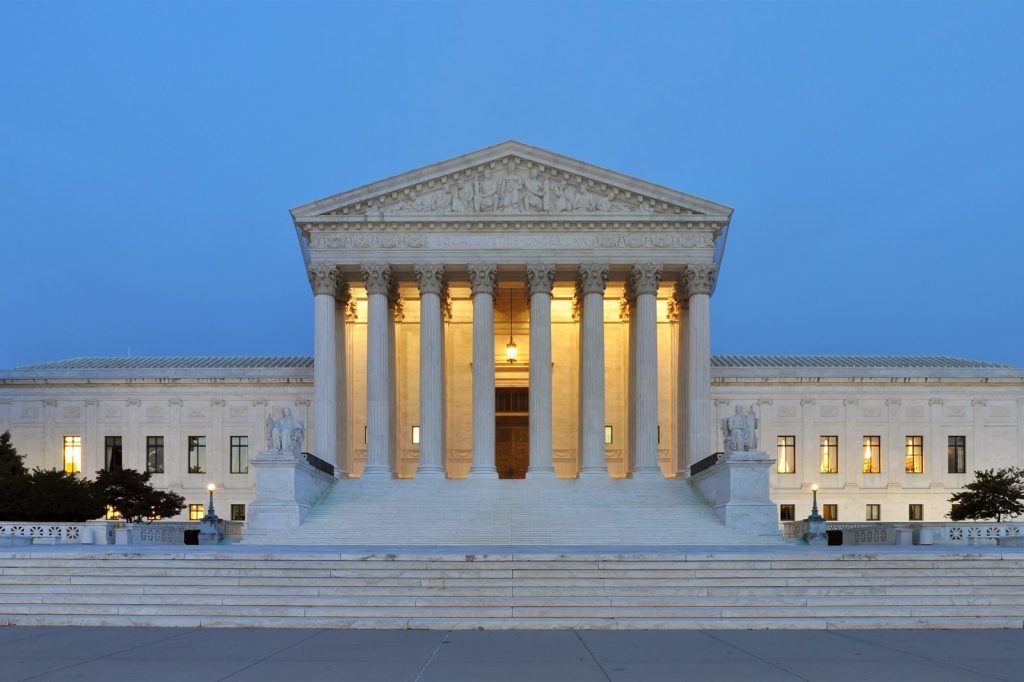
Six justices to three: that was the margin on June 18, 2025, when the U.S. Supreme Court let stand Tennessee’s ban on gender-affirming medical care for minors. The case was United States v. Skrmetti, and Chief Justice John Roberts wrote the majority opinion.
The law, SB 1, took effect on July 1, 2023. It bars doctors from giving minors treatments meant to help them live as an identity at odds with their sex. Families and a Tennessee physician challenged it, and the Biden administration’s Justice Department sided with them. They argued that the ban sorts people by sex and by transgender status, so it should face tougher judicial review.
What the majority decided
The Court did not accept that. “SB1 does not classify on any bases that warrant heightened review,” it wrote. In the majority’s reading, the law draws lines only by age, since adults may receive certain treatments and minors may not, and by medical use, since puberty blockers are allowed for some conditions and not others. Those lines need only a rational basis, the Court said, and it found one. Tennessee had pointed to an ongoing debate among medical experts over the risks and benefits of puberty blockers and hormones, and the ban “responds directly to that uncertainty.”
Roberts also rejected the idea that any mention of sex in a law triggers closer scrutiny. “Such an approach, moreover, would be especially inappropriate in the medical context,” he wrote, because some treatments are “uniquely bound up in sex.” The Court left open whether transgender status is a protected class, and it declined to say whether the reasoning of the 2020 employment case Bostock v. Clayton County reaches past Title VII.
“The case carries with it the weight of fierce scientific and policy debates,” Roberts wrote, adding that “the implications for all are profound.” He closed by sending the policy questions back to “the people, their elected representatives, and the democratic process.”
Concurrences and dissents
Justice Clarence Thomas concurred. He argued there was “no reason to import Bostock’s Title VII analysis into the Equal Protection Clause” and that states have an interest in making sure minors have time to understand treatments that are irreversible. Justice Amy Coney Barrett also concurred, writing that transgender status does not bear the “obvious, immutable, or distinguishing characteristics” that mark race or sex. Justice Samuel Alito saw a “strong argument” that SB 1 classifies by transgender status, but agreed it would not earn heightened scrutiny.
Justices Sonia Sotomayor, Elena Kagan and Ketanji Brown Jackson dissented. Sotomayor wrote that the Court “abandons transgender children and their families to political whims.” Kagan joined most of Sotomayor’s opinion but filed a separate dissent saying she was not deciding whether the law would survive heightened scrutiny.
Where the ruling leaves other states
KFF counted 27 states with bans on such care for minors as of June 2025. Twenty-five of those bans stay in place after the decision. Courts have blocked the laws in Montana and Arkansas. The Montana challenge rests on the state constitution, and the Arkansas injunction rests partly on the due process rights of parents, so neither depends on the equal protection question the justices settled. Arizona and New Hampshire restrict only surgery, which was not before the Court.
Chase Strangio, the ACLU lawyer for the families, said before the ruling that for many of them “the worst case scenario has already happened,” with some traveling long distances to reach care. After the decision, he said litigators would keep going: “We will find ways to keep fighting.” They are pressing a separate argument that the bans violate parents’ right to direct their children’s medical care, which the ruling does not touch. Strangio said the Supreme Court could hear it as soon as next year.
Shannon Minter, legal director of the National Center for Lesbian Rights, described the ruling as a “green light” for the Trump administration.
Sources
- Supreme Court Upholds Tennessee’s Ban on Gender-Affirming Care
- What are the Implications of the Skrmetti Ruling for Minors’ Access to Gender Affirming Care? | KFF
- Supreme Court upholds Tennessee ban on gender-affirming care for minors
Sources
- Supreme Court Upholds Tennessee's Ban on Gender-Affirming Care
- What are the Implications of the Skrmetti Ruling for Minors' Access to …




