
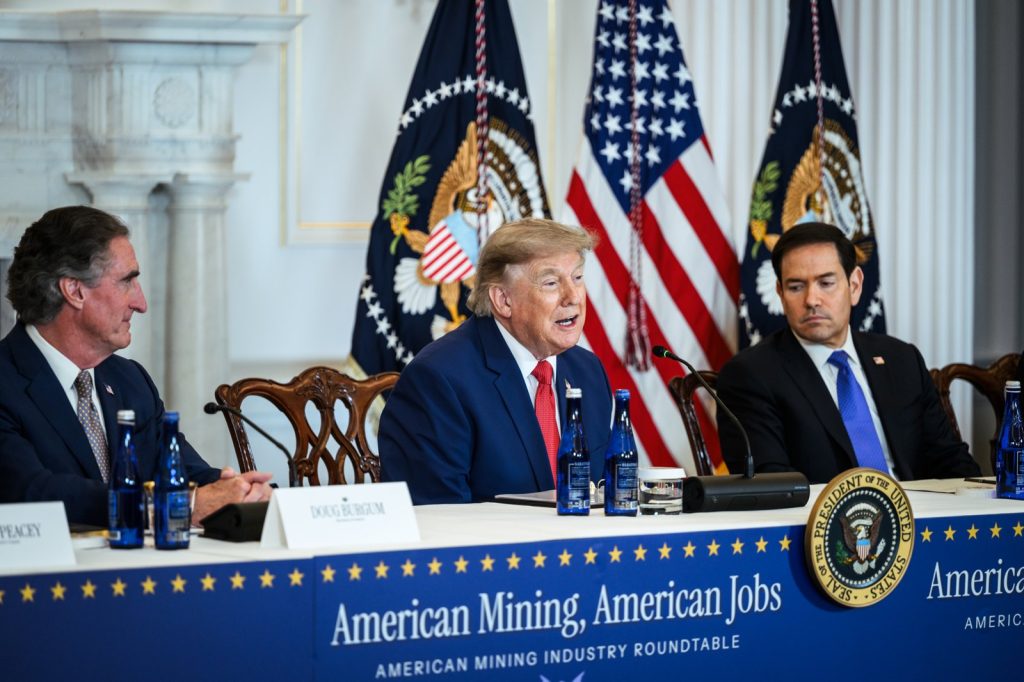
Inside the West Wing, a deliberate and quiet process of preparation is underway as President Donald Trump and his top advisers shape a new tariff plan aimed at increasing economic pressure on a key global adversary. The proposal, still under development and not yet officially announced, has drawn in Secretary of State Marco Rubio, National Security Advisor Mike Waltz, and Treasury Secretary Scott Bessent, signaling that the initiative extends well beyond routine trade policy into the realms of foreign policy and national security.
The plan reflects a continuation of Trump’s approach during his second term, which has been marked by broad import levies and confrontational economic measures against foreign governments.
Strategic Scope and Senior Advisers
The involvement of Rubio, Waltz, and Bessent underscores the multi-dimensional nature of the planned tariffs. Their discussions indicate that the administration views these measures not merely as a commercial tool but as a lever to advance broader strategic objectives.
The president, who took office on January 20, 2017, for his first term and returned to the White House in 2025, has long pursued an assertive trade agenda. During his first term, Trump initiated a trade war with China and withdrew from several international accords, establishing a pattern of using tariffs to confront adversaries directly. His second presidency has followed a similar trajectory, with the current tariff discussions fitting into a broader pattern of leveraging economic pressure alongside national security goals.
The approach affects pricing, alliance relationships, and global stability in ways that reach beyond Washington’s immediate policy circles. Trump’s personal history as a businessman—leading a family real estate firm, building hotels, casinos, and golf courses, and licensing his name to side ventures—before entering politics and later hosting a long-running reality television program, reinforced his image as a wealthy dealmaker.
His political career has been unusual: he won the 2016 election as an outsider, and his return to office in 2025 followed a criminal conviction and two dismissed federal indictments, a rare arc in American political history. These background facts provide context for the current tariff discussions, which blend trade policy with national security objectives in a manner consistent with Trump’s earlier actions.
Coordination With Allies and Congressional Support
The administration is not developing the tariff plan in isolation. It involves coordination with key allies, including the European Union, which imposed its own sanctions on Russian oil in June 2022.
Those sanctions included a ban on seaborne imports of Russian crude oil effective December 5, 2022, and a ban on refined petroleum products effective February 5, 2023. By aligning with the EU’s existing measures, the Trump administration aims to build a united front that increases the economic impact on the adversary. In addition, Saudi Arabia, a leading member of OPEC, has been consulted to help ensure stable global oil supplies if Russian exports are disrupted by the new tariffs.
This diplomatic outreach reflects a recognition that unilateral action could destabilize energy markets, and it underscores the administration’s effort to manage potential side effects. On Capitol Hill, the U.S. Congress has been briefed on the plan’s outlines.
Some lawmakers have already voiced support for tougher measures on Russian energy. Senator Lindsey Graham (R-SC) and Senator Richard Blumenthal (D-CT) have both expressed backing for a harder line. Their bipartisan support suggests that the proposal may gain traction in Congress, even if the final form of the tariffs remains uncertain.
The involvement of both a Republican and a Democrat indicates that the plan’s national security rationale resonates across party lines.
No Final Decision Yet and Broader Implications
Despite the advanced planning and high-level consultations, no official announcement has been made, and the tariff proposal is still under development. The absence of a final decision leaves room for further adjustments as the administration weighs the economic and diplomatic consequences. The plan, if implemented, would escalate economic pressure on a key global adversary, potentially reshaping trade relationships and alliance dynamics.
The background of the current tariff discussions fits a pattern from Trump’s second presidency: broad import levies and confrontational economic pressure on foreign governments. Readers should understand that Trump’s use of tariffs blends trade policy with national security goals, affecting prices, alliances, and global stability far beyond the confines of Washington policy debates.




