
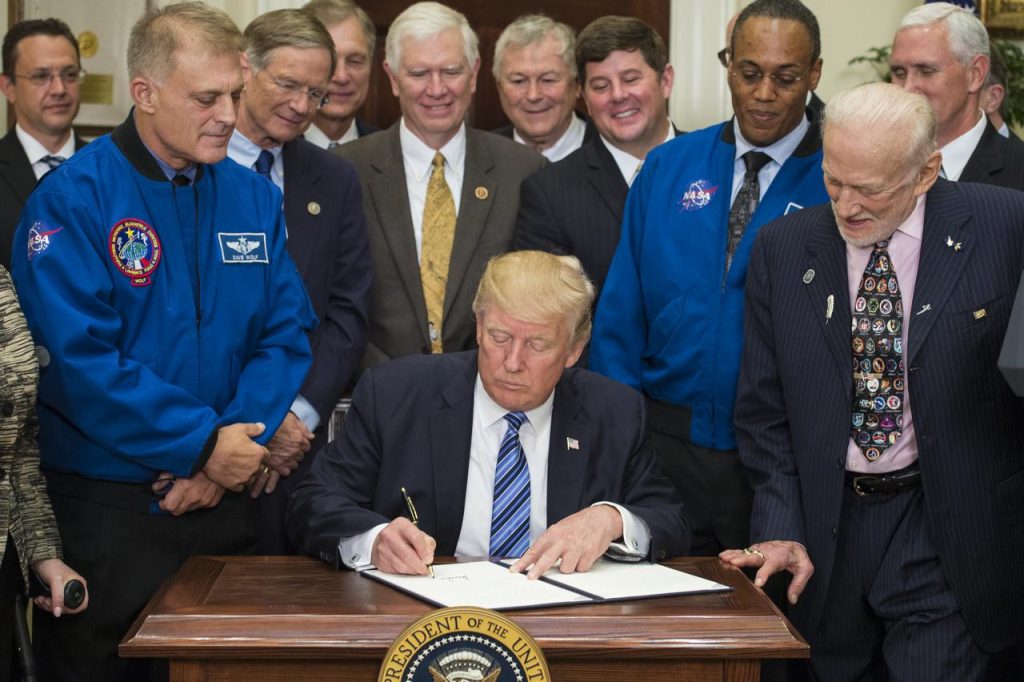
WASHINGTON, July 12 — The executive order signed on March 22, 2025, has quietly reshaped the legal architecture of US policy toward Venezuela, granting the Secretary of State explicit authority to open conditional talks with the Maduro government. Under the hood, the order mandates a 90-day reporting cycle to Congress on progress, with the first report due by June 20, 2025. This is not a blank cheque for engagement; it is a tightly scripted process with specific benchmarks.
The order authorises the Secretary of State to pursue negotiations, but only if those talks aim at three concrete outcomes: securing the release of political prisoners, scheduling free and fair elections, and allowing humanitarian aid into the country. As of March 2025, the US has not formally recognised the Maduro government.
The order, however, opens the door for conditional engagement — a technical reality that marks a shift from the previous posture of non-recognition and maximum pressure. The mechanism is reciprocal. The order allows the Secretary of State to lift sanctions if Venezuela meets specific benchmarks, the detail that matters being the requirement for internationally monitored elections.
This is not a unilateral concession; it is a calibrated lever designed to produce verifiable change. Analysts at the Council on Foreign Relations have noted that the order could lead to a new round of negotiations, drawing a direct parallel to the Mexico City talks of 2021-2023.
Those talks, as ever, stalled over disagreements on election conditions — the same fault line that the current order seeks to address. The 90-day reporting requirement is the enforcement mechanism. Congress gets a regular, structured update on whether the Maduro government is meeting the stipulated conditions.
This creates a rhythm of accountability that was absent during the previous rounds of negotiation. The first report, due by June 20, 2025, would have offered the initial assessment of whether the policy shift is producing results. The practical implications are significant.
The order gives the Secretary of State the legal cover to engage directly with representatives of the Maduro government, something that was politically fraught under the previous policy framework. The conditionality is the safeguard: talks can proceed, but only if they are demonstrably aimed at the three stated outcomes.
If the Maduro government fails to make progress on political prisoners, election scheduling, or humanitarian access, the order provides the basis for maintaining or even tightening sanctions. The Mexico City talks of 2021-2023 serve as the cautionary precedent. Those negotiations, which involved the US, the Venezuelan opposition, and the Maduro government, broke down precisely over the terms of election conditions.
The current order attempts to address that failure by embedding the election benchmark into the legal text itself, making it a non-negotiable condition for sanctions relief. Whether this structural change will produce a different outcome remains an open question.
For informed readers, the technical reality is this: the order does not represent a change in US recognition of the Maduro government. It does, however, create a formal channel for conditional engagement, backed by a congressional reporting requirement that ensures oversight. The next 90-day report, due in September 2025, will be the first real test of whether the policy is gaining traction or heading toward the same impasse as the Mexico City talks.
As ever, the detail that matters is whether the Maduro government meets the election monitoring benchmark — that is the hinge on which sanctions relief turns.




