
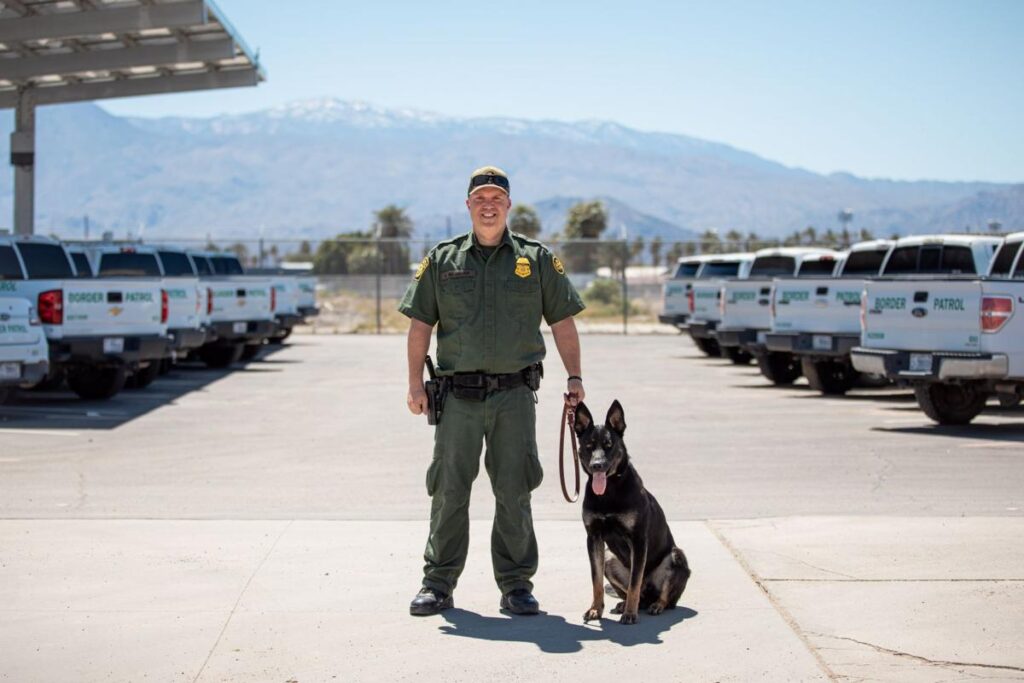
WASHINGTON, July 20 — On the ground at a commercial port of entry south of San Diego, a K‑9 team from U.S. Customs and Border Protection sniffs a line of tractor‑trailers waiting to cross under the SENTRI and FAST programs. The dog, part of the largest federal law enforcement K‑9 program in the country, works one of 73 commercial ports and 74 Border Patrol stations where such teams are deployed daily.
It is a single moment in an agency that fields more than 58,000 personnel, spreads across 328 officially designated ports of entry, and patrols nearly 1,900 miles of border with Mexico and 5,000 miles with Canada.
A Federal Force of Over 58,000
U.S. Customs and Border Protection is the largest federal law enforcement agency inside the U.S. Department of Homeland Security. Its headquarters sits in Washington, D.C., but the agency’s reach is national — and international. Roughly 33,300 CBP officers inspect passengers and cargo at those 328 ports plus 14 pre‑clearance locations abroad.
Along the land borders, about 21,000 Border Patrol agents cover the full stretch of the southern and northern frontiers. Beyond the uniformed presence, the agency fields around 2,200 agriculture specialists who work to keep harmful pests and diseases from entering the country.
Another 1,000 air and marine interdiction agents patrol from above and afloat. And roughly 2,500 revenue employees — import specialists, auditors, international trade specialists, and textile analysts — appraise and classify imported merchandise, enforcing trade and tariff laws that generate more than $30 billion annually in entry duties and taxes.
Ports of Entry and Pre‑Screened Travel
The scene at any major land crossing is shaped by programs that aim to speed legitimate traffic while screening for risk. Along the southern border, the SENTRI program allows pre‑approved travelers to use dedicated lanes. Its northern counterpart is NEXUS.
Commercial trucks use the Free and Secure Trade (FAST) program, which relies on transponder technology to clear pre‑vetted cargo. CBP also screens all air passengers for terrorist risk through systems that include APIS, US‑VISIT, and SEVIS.
The agency collaborates with the Food and Drug Administration to screen imported food shipments before they reach store shelves. And through the Container Security Initiative (CSI), CBP identifies and inspects high‑risk cargo at 58 foreign ports — before that cargo is even loaded onto vessels bound for the United States.
K‑9 Units and Interior Checkpoints
The K‑9 program, the largest among federal law enforcement agencies, deploys teams to 73 commercial ports and 74 Border Patrol stations. Dogs are used for terrorist detection and apprehension. By nightfall, many of those teams will have worked shifts at primary inspection lanes or roamed warehouse yards where shipping containers are stacked.
CBP’s legal jurisdiction does not stop at the border. The agency operates interior checkpoints up to 100 miles inland from any land or sea border, a statutory reach that extends enforcement deep into the country.
Those checkpoints are often staffed by Border Patrol agents who stop vehicles to check immigration status, part of a layered enforcement strategy that stretches from foreign ports to interior roads. As international trade and travel volumes shift, the agency’s role remains anchored in the numbers: 58,000 personnel, 328 ports, $30 billion in annual duties, and a canine corps that works every day at dozens of stations and ports across the nation.




