A Warning From Thirty-Two Nations
Thirty-two governments, including the United States, the European Union, the United Kingdom, and Canada, have issued a formal warning regarding the alarming deterioration of food security in Sudan. The joint statement, released by the US State Department on Monday, calls for urgent action to prevent the crisis from tipping into full-scale famine. This diplomatic move highlights how a conflict in the Horn of Africa directly impacts global stability and tests the limits of international aid mechanisms.
The signatories, which also include Australia and 28 European countries, stated that Sudan is experiencing an alarming deterioration in its food security. They emphasized that the risk of famine in the coming months, as warned by the Integrated Food Security Phase Classification, requires immediate intervention. The statement places primary responsibility on the parties to the conflict to alleviate the suffering of the Sudanese people by lifting all impediments on humanitarian assistance.
For communities and families across the region, the stakes are immediate and severe. The conflict between the Sudanese army and the Rapid Support Forces has created the world’s largest hunger and displacement crisis. Approximately 19.5 million people, or 41% of Sudan’s population, face high levels of acute food insecurity. Without immediate action, the number of children suffering from severe acute malnutrition could exceed the projected 825,000, a figure that underscores the human cost of this geopolitical standoff.
Strategic Stakes on the Red Sea
Sudan’s strategic position on the Red Sea makes its stability critical to one of the world’s busiest shipping lanes. The port city of Port Sudan serves as the country’s wartime seat, a hub that connects global trade routes. When stability collapses in such a vital corridor, the consequences ripple far beyond the African continent, affecting supply chains and security interests from Asia to the Americas.
The crisis is not merely a local tragedy; it is a test of how the international community manages instability in key geographic chokepoints. The US State Department has noted that neither the Sudanese army nor the Rapid Support Forces represents legitimate, constitutional governance for Sudan. This lack of a recognized central authority complicates diplomatic efforts and makes it harder to enforce aid access or protect civilian infrastructure. For American foreign policy, the situation demands a clear stance that supports humanitarian access while navigating the complexities of a fractured state.
The warning from the 32 nations is a public call to the warring parties, not a binding order. It is unclear whether either side will open new routes for aid. However, the statement serves as a formal record of the international community’s position. It signals that the global order expects compliance with humanitarian norms, even in the midst of active civil war. This diplomatic pressure is a tool used to maintain regional stability and protect the interests of nations that rely on safe passage through the Red Sea.
Starvation as a Weapon of War
The current famine risk in Sudan does not exist in a vacuum. It follows a historical precedent of using starvation as a method of warfare. Prior to the 2024 famine, Sudan experienced two previous famines in 1993 and 1998. These earlier crises were caused by scorched earth military tactics during civil wars, which led to the displacement of thousands and the erosion of native crops. These events introduced a weakness into the farming and food chain of Sudan that allowed the 2024 crisis to attack with such severity.
Warring parties are currently accused of using starvation as a method of warfare by blocking aid, looting markets, and destroying agricultural infrastructure. Human rights groups have reported that the Rapid Support Forces have looted cities and destroyed harvests. Meanwhile, the Sudanese army has restricted humanitarian aid deliveries by blocking food shipments into RSF-controlled areas. This dual obstruction severely limits access to life-saving assistance for civilians caught in the crossfire.
The systematic destruction of farming communities has been documented by researchers. In March 2026, The Guardian reported that researchers at Yale’s Humanitarian Research Lab identified 41 farming communities in North Darfur that were attacked between March and June 2024. The report described the RSF’s systematic destruction of farming communities, livestock enclosures, and the residents of these agrarian areas. Such tactics are not just military strategies; they are deliberate efforts to break the food supply chain, leaving populations vulnerable to starvation.
Climate and Conflict Converge
The intersection of climate-driven drought and conflict-driven famine has exacerbated the crisis. El Niño, a climate pattern that disrupts rainfall, has added drought across more than half of the country. This environmental factor has driven up food prices and reduced local crop yields, making it even harder for families to secure basic sustenance. Farmers have struggled to harvest crops since the war began, and the combination of prolonged violence and severe restrictions on humanitarian operations has contributed directly to the emergence of famine conditions.
The Integrated Food Security Phase Classification, a United Nations-backed hunger monitor, warns that famine conditions are a high risk in areas like North Darfur and Kordofan. In Tawila, in North Darfur, more than 700,000 displaced people lack enough food, water, and health care, according to the World Health Organization. The UN reports that as of October 2026, less than half of the humanitarian appeal for Sudan has been funded. This funding gap leaves a critical void in the response efforts, leaving millions without the support they need to survive.
For ordinary people, the impact is tangible and devastating. The Sudan Doctors Union estimated in January 2025 that 522,000 children had died due to malnutrition. The United Nations reported that during the war, Sudan endured a 500% increase in verified cases of killings, sexual violence, and recruitment into armed groups. These statistics paint a picture of a society under siege, where the basic needs of survival are being systematically denied by the very actors responsible for the conflict.
Regional Instability and Displacement
The economic and security consequences of regional mass displacement are becoming increasingly apparent. More than 13 million people have been displaced by the conflict, creating regional instability as refugees cross borders. This mass movement of people strains the resources of neighboring countries and complicates diplomatic relations in the region. The crisis is no longer contained within Sudan’s borders; it is a regional challenge that requires a coordinated international response.
The joint statement from the 32 governments urges the warring parties to allow humanitarian operations through all routes across front lines and borders, including air access to the region of Darfur. They also call on the parties to sustain the presence and protection of humanitarian personnel throughout Sudan and to refrain from hitting civilian infrastructure. These demands are aimed at ensuring that aid can reach those most in need, regardless of the political or military situation on the ground.
As the war enters its fourth year, the situation remains fluid. The IPC has stated that there is not enough survey data for a full analysis, so the warning rests on trends and projections. No famine has been formally declared, but the risk is high. The international community is watching closely, knowing that the outcome of this crisis will have far-reaching implications for global stability. For readers and communities around the world, the lesson is clear: the health of the global system depends on the ability of nations to act together in the face of humanitarian emergencies.
Sources
- Famine in Sudan (2024–present)
- US, EU and 30 countries warn of famine risk in Sudan, call for aid
- 32 Governments Warn of Sudan Famine Risk
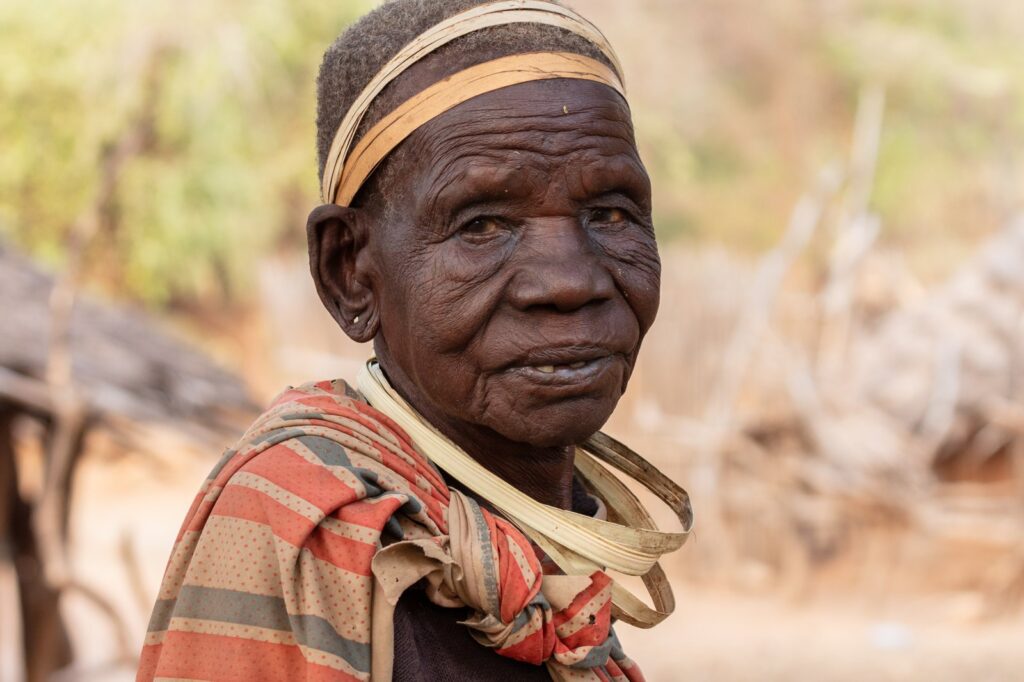
Photo: Diego Delso (CC BY-SA 4.0)