
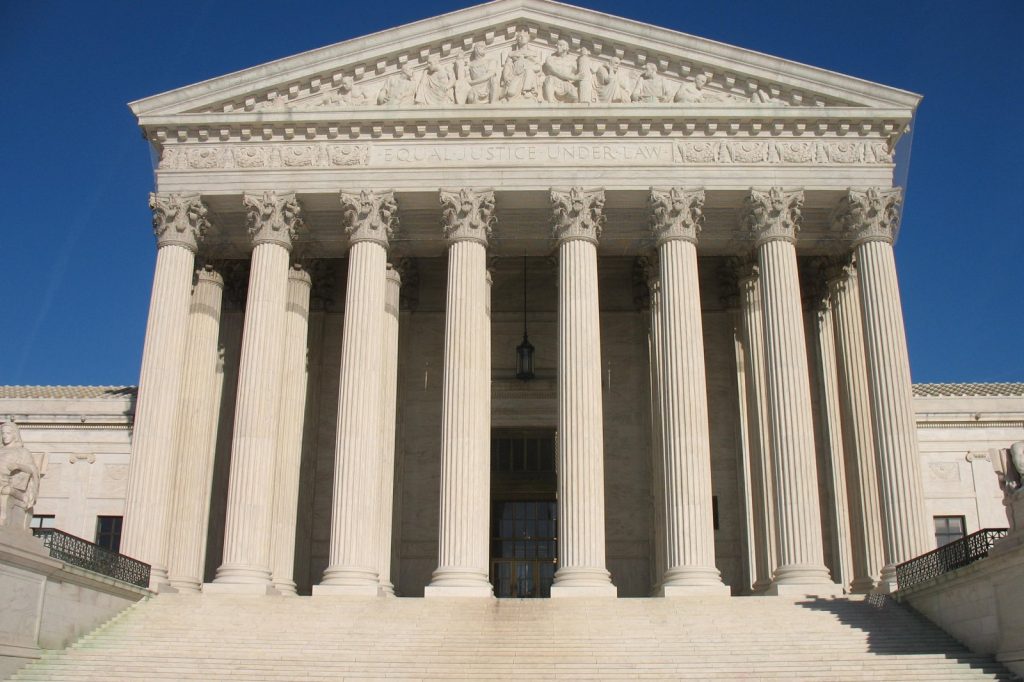
WASHINGTON, July 19 — The Fourth Amendment, ratified in 1791 and officially part of the Constitution the following year, remains the primary legal barrier between American citizens and warrantless government intrusion. Its text — prohibiting unreasonable searches and seizures, requiring judicially issued warrants backed by probable cause and particular descriptions of places and persons to be seized — was forged in reaction to the general warrants that had swept colonial homes.
English common law, notably Semayne’s Case (1604) declaring a man’s house his castle, and the 1760s litigation by John Entick against blanket warrants for seditious materials, shaped the American demand for specificity. Strategically, the Framers understood that unchecked search power could become a political weapon.
The amendment originally bound only the federal government. It took Mapp v. Ohio (1961) to extend those protections to state and local governments through the Due Process Clause of the Fourteenth Amendment.
That same year, the calculus of policing shifted dramatically: evidence obtained in violation of the Fourth Amendment now faced exclusion at trial, a remedy established in Weeks v. United States (1914) and expanded to include derivative evidence under the “fruit of the poisonous tree” doctrine — unless the government could show the evidence would have been inevitably discovered by lawful means.
Technology and the privacy test
The application of the Fourth Amendment to modern surveillance, including public cameras, traces to Katz v. United States (1967). The Supreme Court held that the amendment protects people, not places, and that a “reasonable expectation of privacy” determines whether government observation constitutes a “search” requiring a warrant.
This is not a static standard. The broader stakes: as surveillance technology multiplies, the question of when a camera watching a public street becomes a search remains contested.
The Court has carved out exceptions — consent searches, motor vehicle searches, evidence in plain view, exigent circumstances, and border searches — that allow government action without a warrant. What this signals is a legal framework that continuously recalibrates between security and liberty. For the current administration, the Fourth Amendment is not an abstraction.
The exclusionary rule, for all its force, does not apply when evidence would have been discovered inevitably. The calculus for law enforcement and intelligence agencies involves weighing operational necessity against constitutional restraint.
The historical roots are not merely academic: the same struggle against general warrants that animated the Founders now animates debates over warrantless data collection and facial-recognition cameras. Looking ahead, the reasonable-expectation-of-privacy test will face new pressures as surveillance infrastructure expands. The Court has not yet ruled definitively on persistent public video monitoring, leaving lower courts to apply Katz case by case.
The broader geopolitical reality is that the United States, unlike some authoritarian states, continues to tether its surveillance powers to a constitutional warrant requirement — a strategic divergence that defines the liberal democratic approach to internal security.




