
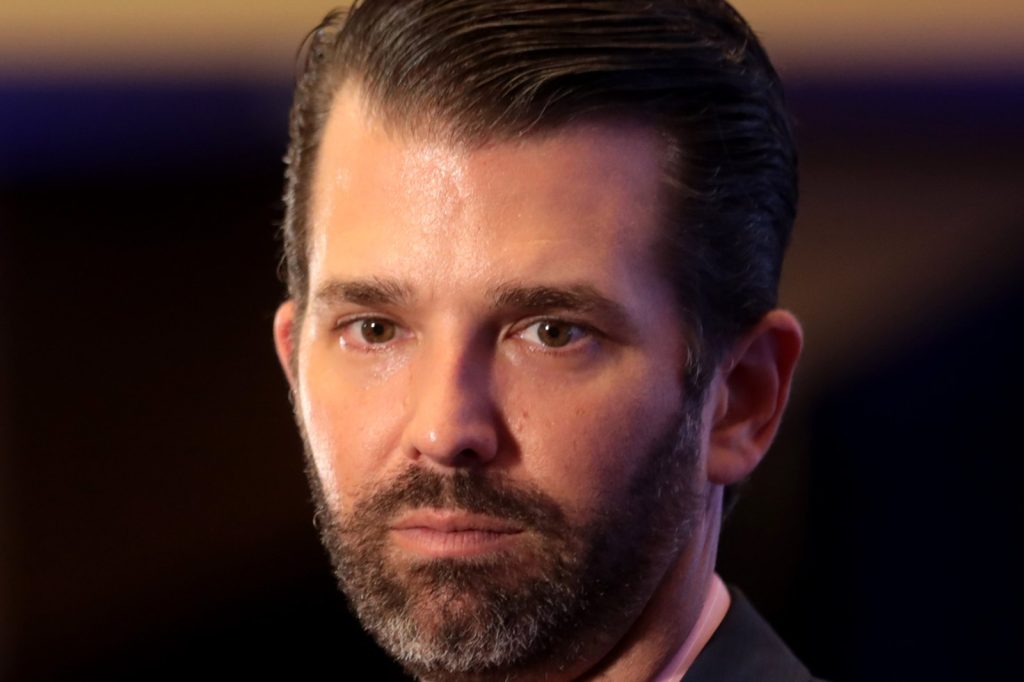
WASHINGTON, July 19 — At the Trump Organization’s headquarters on Fifth Avenue, there is no blind trust. That single decision, repeated across two presidencies, now sits at the center of a gathering ethics debate as President Donald Trump’s sons steer investments into defense tech companies holding lucrative government contracts. The Emoluments Clause of the U.S. Constitution — Article I, Section 9 — bars any federal officeholder from accepting a present, emolument, office, or title from a foreign state without congressional consent.
During Trump’s first term, a cascade of lawsuits alleged that his family’s hotels and golf courses violated that clause by taking money from foreign governments. The Supreme Court eventually dismissed those cases as moot after he left office in January 2021.
Trump is now back in the Oval Office, and the legal landscape has shifted. Today, the sons’ defense tech holdings reanimate those old questions with a sharper edge. While the President himself enjoys an exemption from many federal ethics rules, his family members do not.
The Office of Government Ethics, created by the Ethics in Government Act of 1978, can offer guidance to executive branch employees but carries no power to enforce criminal penalties. Federal regulations at 5 C.F.R. § 2635 already prohibit executive branch employees from participating in any matter in which they hold a financial interest — a standard that, on paper, would seem to cover the Trump children.
Emoluments Clause and the Presidency
The Emoluments Clause is not a dusty relic. It was written to prevent foreign influence from seeping into the highest reaches of American power through gifts, payments, or titles. The lawsuits filed during Trump’s first term argued that foreign diplomats and state-owned entities spending money at Trump properties amounted to precisely that kind of prohibited emolument.
The courts never reached a final verdict on the merits; the cases evaporated when Trump left office. Now, with the President again in power and his family’s business still operating without the structural firewall of a blind trust — the standard arrangement in past administrations — the same legal machinery faces a new set of transactions.
No federal investigation into the sons’ defense tech investments has been announced. That silence, for now, leaves the matter in a gray zone between existing law and political will.
Family Investments and Ethics Frameworks
Past presidents — from Lyndon Johnson to George W. Bush to Joe Biden — placed their family businesses into blind trusts or divested outright to avoid even the appearance of a conflict. The Trump Organization has declined to follow that precedent.
That choice, amplified by the sons’ foray into defense contracting, raises a straightforward question: if a company co-owned by the President’s children wins Pentagon dollars, who in the executive branch is watching for a conflict of interest? Congress took a run at an answer in 2025.
House Democrats introduced the “Presidential Conflicts of Interest Act,” a bill designed to tighten the rules for family businesses connected to the White House. The legislation did not advance. Its failure leaves the existing framework — a mix of constitutional clauses, statutory guidance from the 1978 Ethics Act, and regulatory prohibitions under 5 C.F.R. § 2635 — as the only guardrails in place.
Those guardrails have gaps. The President is explicitly exempt from many ethics rules.
His family is not, but enforcement relies on self-reporting, advice from the Office of Government Ethics, and the willingness of inspectors general or Congress to act. No formal complaint has surfaced, and no investigation has begun. The legal and ethical frameworks written to police these boundaries are central to understanding what comes next — and for now, they remain untested against the new reality of a president whose business empire is both family-run and defense-linked.




