
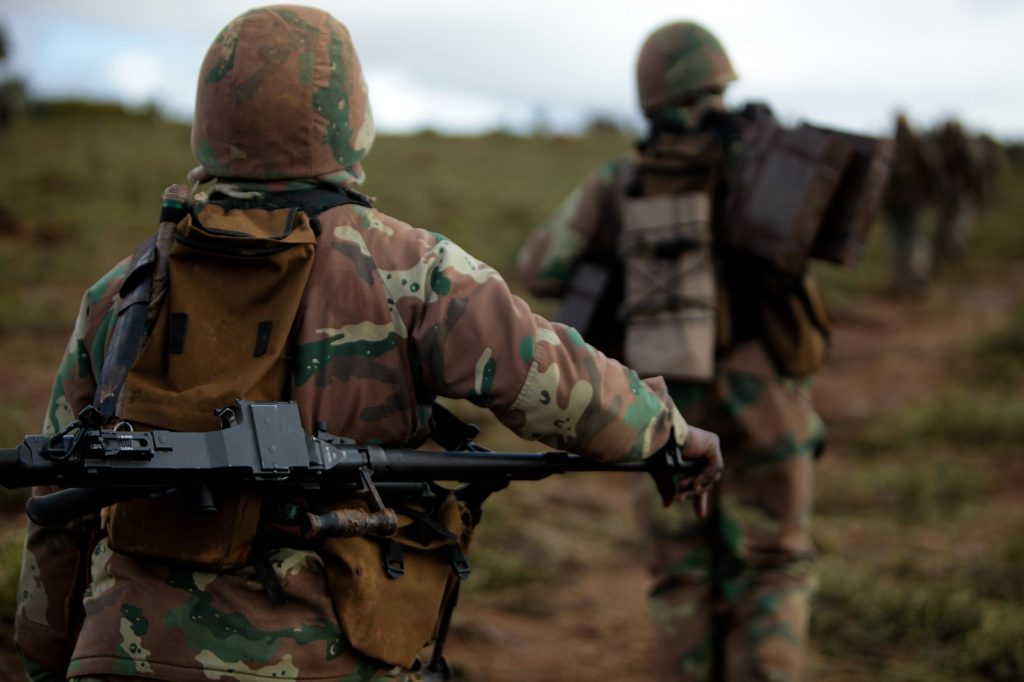
PRETORIA, July 7 — The South African government has deployed 3,405 troops from the South African National Defence Force (SANDF) to quell anti-immigrant protests that erupted across the country. The military intervention marks the latest use of armed forces to manage unrest tied to xenophobic violence.
The SANDF has been called upon in past crises, including the 2019 xenophobic attacks that similarly shook communities. This time, the government’s response extends beyond troop deployment. Over 25,000 migrants have been repatriated, often to countries such as Nigeria, Zimbabwe, and Malawi.
Authorities have also made over 900 arrests related to the protests.
The scale of the repatriation effort is notable, reflecting a pattern of using military force and mass deportations as tools to manage outbreaks of xenophobic violence. However, critics argue that these measures do not address the underlying causes of the unrest.
Unemployment in South Africa exceeded 43 percent in 2026, a figure that many analysts point to as a key driver of tensions between local populations and migrant communities. The economic strain has created fertile ground for scapegoating, with migrants often bearing the brunt of frustrations over job scarcity and limited resources.
For patients of this social ill, the early findings suggest that military intervention alone is unlikely to provide lasting relief. The encouraging part is that the government has demonstrated a capacity for decisive action. Still, patients—in this case, the broader South African public—should look for policies that tackle economic inequality and job creation.
The current approach mirrors strategies used in previous years. During the 2019 xenophobic attacks, the SANDF was also deployed, and repatriations followed. Yet violence has recurred, raising questions about the effectiveness of a purely security-based response.
What to watch next is whether the government will pair its security measures with economic reforms. For now, the troops remain on the ground, and the repatriations continue. Anyone affected by these events should talk to their doctor or local support services for guidance on navigating the uncertainty.
The protests have highlighted deep fractures in South African society. While the military can restore order, healing the underlying wounds will require more than boots on the ground.




