
Loudoun County, Virginia, had 420,959 residents in the 2020 census, making it the state’s third-most populous county. By 2023 its median household income was $156,821, the highest of any county in the nation. In 2011 the same measure stood at $119,134, which was also the top figure in the country that year.
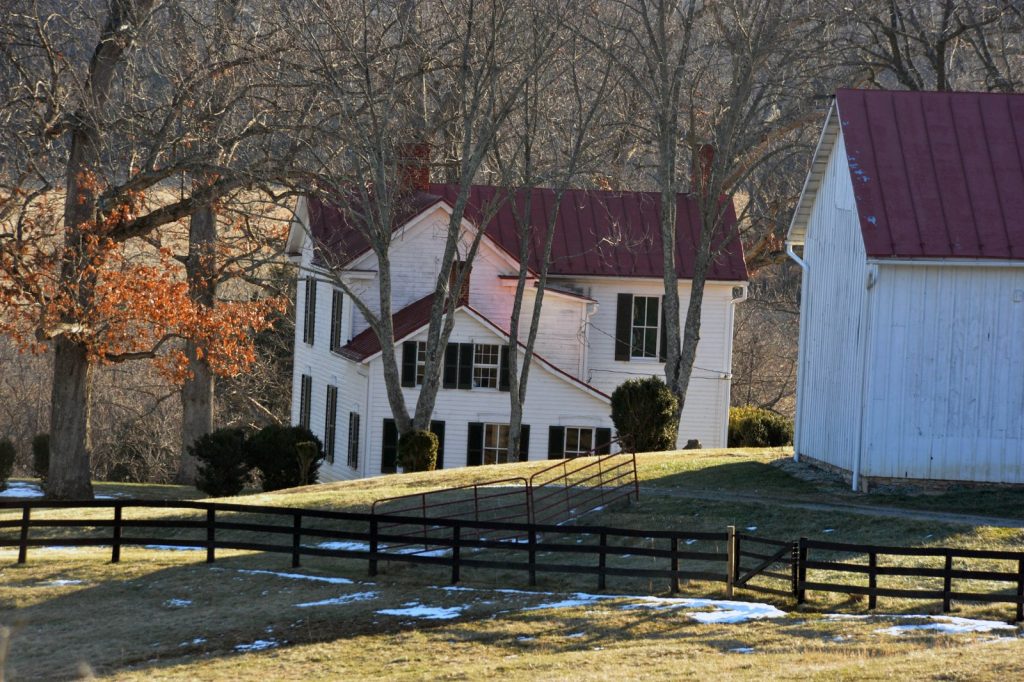
Not long ago the place was farmland.
Settlement and the Revolution
Settlers began arriving in the 1720s and 1730s: English and Welsh Quakers, Scots-Irish and Germans moving south from Pennsylvania and Maryland, plus English settlers and enslaved Africans coming upriver from Tidewater. Virginia created the county in 1757 out of Fairfax County and named it for John Campbell, Fourth Earl of Loudoun, governor general of Virginia from 1756 to 1759.
By the Revolution, Loudoun was the most populous county in Virginia, and a rich farming one. Grain sent to George Washington’s Continental Army earned it the nickname “Breadbasket of the Revolution.”
During the War of 1812, federal documents and government archives were moved out of Washington and stored at Leesburg. Local tradition says they sat at Rokeby House. James Monroe treated Oak Hill Plantation as a primary residence from 1823 until his death on July 4, 1831. The county’s coat of arms and flag, granted by the English College of Arms, recall the Britain-US relationship that grew out of his Monroe Doctrine.
The Civil War
The war split the county, and its position near Washington brought fighting. In April 1861 both of Loudoun’s delegates to the Virginia Secession Convention favored the Union. The convention, presided over by John Janney, a former Quaker and slave owner, voted to secede anyway, and Loudoun voters backed secession too. Some residents formed Confederate cavalry and infantry units. Others crossed into Maryland to join Union cavalry and border guard units.
On October 21, 1861, the Battle of Ball’s Bluff was fought on the Potomac near Leesburg. Oliver Wendell Holmes Jr., later a jurist, was critically wounded there.
Union troops occupied Leesburg in the spring of 1862, then withdrew, and the Confederate army retook it. John S. Mosby, a Confederate partisan, ran his operations from Loudoun and neighboring Fauquier County. In June 1863, during the Gettysburg campaign, Confederate Maj. Gen. J.E.B. Stuart and Union cavalry fought at Aldie, Middleburg and Upperville. By December 1863 Union forces held the county, and it was one of nine that elected delegates to the Virginia General Assembly at Alexandria.
Feeding the army again
In World War I the county supplied provisions to soldiers in Europe. Farmers adopted livestock vaccination, seed inoculation and ensilage. Wheat output reached 1.04 million bushels in 1917, the largest of any Virginia county that year. Home produce totaled 1.2 million units, much of it sent to training sites such as Camp Lee.
The county later dedicated a plaque to its “30 glorious dead” from the war. Five died at the front. The other 25 died in training or elsewhere inside the United States.
Dulles and the data centers
Dulles International Airport opened in 1962 in the county’s southeast corner, at Sterling, and Loudoun has grown rapidly since, with a high-tech boom. Verizon Business, Telos and Orbital Sciences all have headquarters there. Wine and horses survive alongside: the county has 40 wineries, and an equine industry estimated at $78 million in revenue.
Today it holds over 60 large data centers, many tied to Amazon Web Services’ us-east-1 region. Its “Data Center Alley” is the world’s largest cluster, with over 25 million square feet of data center space. One claim holds that these centers carry 70 percent of daily global web traffic. A more conservative estimate puts it at 22 percent.




