
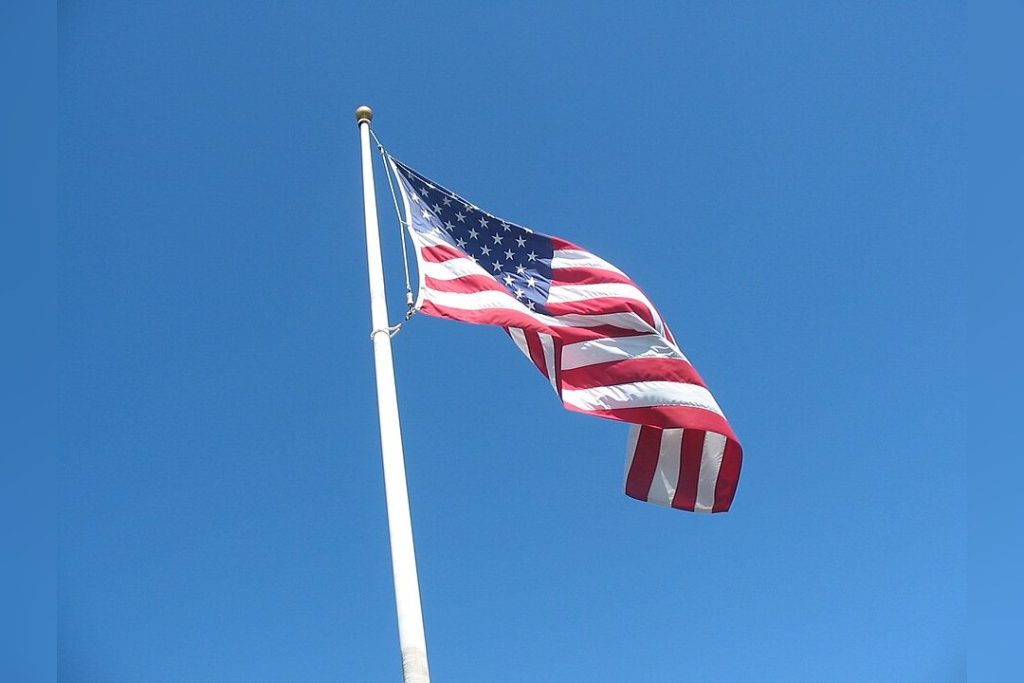
The American flag still flies. That much is true. But here in the industrial Midwest, in the small cities and farm towns that dot the landscape between the coasts, the flag means something specific.
It is not an abstraction about global leadership. It is the banner over the local plant that survived, the hospital that stayed open, the school that still has a roof.
Washington debates whether the United States has been a net positive force on the planet. Economists and historians offer arguments rooted in hard numbers. They point to the country’s dominance in technology, finance, healthcare and aerospace.
They note the per-capita GDP, among the highest in the developed world. They talk about the universities that draw the brightest minds from every continent.
They mention the military, the sea lanes kept open, the global order held together. That is one America. It is not the only one.
On the ground, the story is messier. The report itself says the United States “has not always lived up to its ideals.” It still wrestles with the legacy of slavery, with inequality, with a political system that often seems designed to frustrate rather than to govern. Those are not abstract problems here.
They are the reason the downtown is half-empty. They are the reason the school board meetings are angry.
They are the reason people drive an hour for a job that pays barely enough. The country is exhausting and exhilarating. The report says that.
It is relentless motion. In the major cities — New York, Chicago, Los Angeles — people from everywhere, speaking every language, chase something.
By nightfall, the lights of the skyline remind you of the sheer scale of the American experiment. But what about the places where the skyline is low? What about the towns where the brightest lights are the headlights on the interstate, carrying people through, not to?
The United States has been a global positive force. That is the headline. The story beneath it is more complicated.
The report says that, too. It says the nation has often led by example, even when the example was imperfect.
It says the people believe, with a stubbornness that can be maddening, that tomorrow can be better than today. That stubbornness is real. You see it in the farmer who plants another crop after a drought.
You see it in the mechanic who keeps the old truck running because a new one costs too much. You see it in the teacher who buys supplies with her own money.
It is not blind optimism. It is a choice. What America still teaches us is not a simple lesson.
It is a messy one. The report says that. It says power, used imperfectly, can still be a force for good.
That is not the same as saying it always is. It is not the same as saying it is easy.
On the ground, the flag still flies. The country stumbles. It leads.
It fails. It tries again.
That is the America that exists between the numbers and the debates. It is the America that the economists and historians and diplomats describe, but it is also the America that does not fit neatly into their arguments. It is the America that is both exhausting and exhilarating, both flawed and essential.
It is the America that, for all its contradictions, still believes tomorrow can be better. That belief is not a policy. It is not a statistic.
It is a fact of life here. And it is the only thing that keeps the lights on.




