
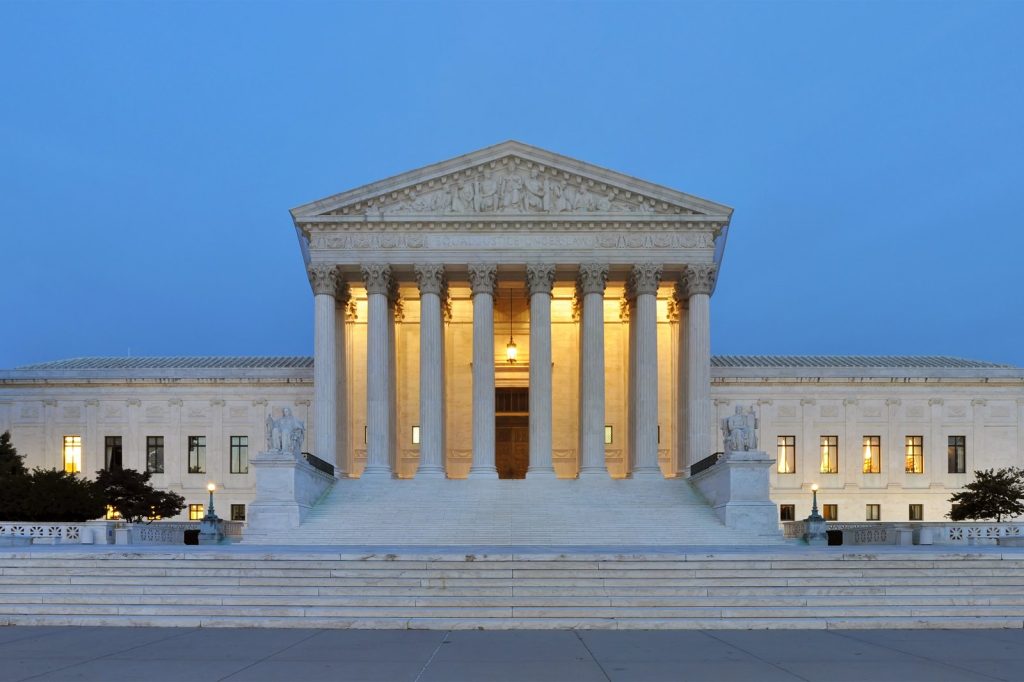
The U.S. Supreme Court is preparing to hear arguments in TikTok, Inc. v. Garland, a case challenging the constitutionality of the Protecting Americans from Foreign Adversary Controlled Applications Act (PAFACA). The legislation, passed by Congress in April 2024, prohibits the hosting and distribution of apps from social media companies owned by foreign nationals or parent companies based in countries the U.S. designates as foreign adversaries.
PAFACA specifically identifies Chinese firm ByteDance Ltd. and its subsidiary TikTok as entities under foreign adversary control. The law requires these companies to divest from their foreign holdings by January 19, 2025, or face a ban on operations within the United States. Congress cited national security concerns as the primary motivation for enacting the legislation, granting the President authority to determine which companies pose a threat and mandate divestiture.
ByteDance and TikTok have filed suit against the federal government, arguing that PAFACA violates the Freedom of Speech Clause of the First Amendment and the Bill of Attainder Clause of Article One, Section Nine. The companies also contend the law breaches Fifth Amendment protections. The case has been consolidated with Firebaugh v. Garland, a separate lawsuit brought by TikTok content creators who similarly challenge the statute’s legality.
The legal challenge raises questions about the intersection of national security measures and constitutional rights. TikTok creators involved in the Firebaugh suit argue that the law not only infringes on the company’s rights but also on the free expression of its users. This aspect of the case highlights broader debates about how security-focused regulations may affect individual liberties and the role of social media platforms in contemporary society.
As the January 19, 2025, divestment deadline approaches, the Supreme Court’s ruling carries significant weight for both the social media industry and national security policy. A decision favoring the government would compel ByteDance and TikTok to divest or cease U.S. operations. Conversely, a ruling for the companies could set a precedent allowing other foreign-owned social media platforms to continue operating in the country without similar restrictions.
Legal experts and lawmakers are closely monitoring the proceedings, as the outcome is expected to shape future regulatory approaches to foreign-controlled technology companies. The case represents a pivotal moment in the ongoing debate over balancing national security interests with constitutional freedoms. With the deadline now passed, attention turns to the Supreme Court to deliver a decision that will influence the trajectory of social media regulation and First Amendment jurisprudence in the United States.




